This Blog is created to stress the importance of Peace as an environmental directive. “I never give them hell. I just tell the truth and they think it’s hell.” – Harry Truman
(I receive no compensation from any entry on this blog.)
Wednesday, February 15, 2006
Day after Tomorrow.
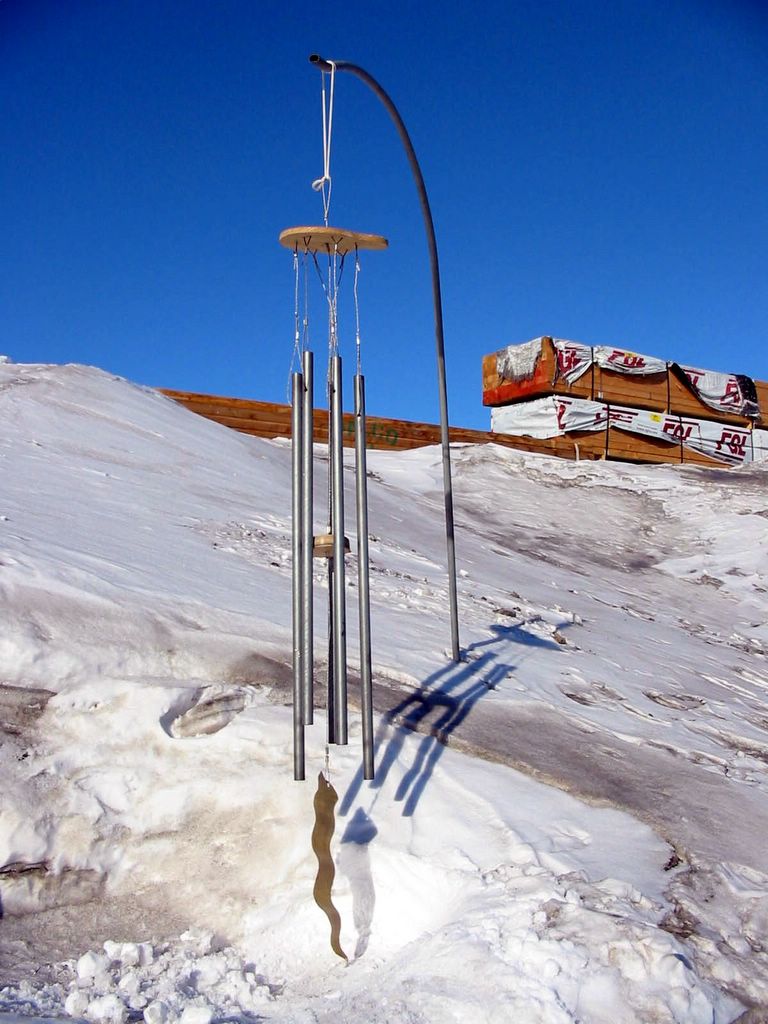
February 12, 2006. In Windsor looking toward Detroit.
Love, Chinese Style.
Li Bingxiang (L), 101, presents his 97-year-old wife Zhang Liying a bouquet of roses in Jinan, Shandong Province on Valentine's Day. The couple have been married for 73 years.
Chinese president asks senior officials to promote rural development Chinese President Hu Jintao Tuesday asked provincial and ministerial heads to attach importance and take concrete actions to boost rural development. "Building a socialist new countryside is a major historic mission set by our Party," Hu Jintao, who is also the general secretary of the Communist Party of China (CPC) Central Committee, told a seminar on building a socialist new countryside. He asked all CPC members and the whole nation to work jointly to make the drive "a project for the people" that truly benefits the vast number of farmers. Members of the Standing Committee of the Political Bureau of the CPC Central Committee Wu Bangguo, Wen Jiabao, Jia Qinglin, Wu Guanzheng, Li Changchun and Luo Gan also attended the opening ceremony chaired by Zeng Qinghong, a members of the Standing Committee of the Political Bureau of the CPC Central Committee, vice Chinese president and president of the Party School of the CPC Central Committee.
Presidents' new energy dreams Energy issue again ascends to the top priority of presidents' agenda in various nations in the first two months of this year. French President Jacques Chirac has declared the development of civilian nuclear reactors to safeguard the country's energy security in preparation for the post-oil era. American President George W. Bush has shifted emphasis on his new energy policy, Advanced Energy Initiative. Japan also plans to release its New National Energy Strategy to reduce its oil dependence rate to 40% or below the current 50%. Apart from above, energy issue has been listed on the agenda of the EU Summit to be held in late March. What's more, energy will be the centerpiece on the G-8 Summit to be held in June in St. Petersburg. Apparently when many leaders in industrialized countries made their wishes for prosperity in the new year, they also spoken up their "new energy dreams". Among them, US President Bush's "energy independence" policy aroused the biggest attention.
WB offers loan to renewable energy project in China The World Bank has approved an 86.33 million US dollar loan to scale up China's use of renewable energy as the country's demand for power increases, the bank said Wednesday. The World Bank's Board of Executive Directors approved the follow-up project to the 2005 China Renewable Energy Scale-Up Program Phase 1, which would develop a large wind farm in the China's Inner Mongolia Autonomous Region and rehabilitate and develop selected small hydropower projects in Zhejiang Province, the bank said in a statement. The bank said the overall renewable energy scale-up program aims to develop the Chinese commercial market for energy suppliers to provide renewable energy to the electricity grid on a large scale in an efficient and cost-effective way. Renewable energy sources like wind power, solar power, and biomass have up to now been produced only in small-scale, pilot programs, outside the main electricity supply. Noureddine Berrah, lead energy specialist, said "China's energy demands and its need to decrease air pollution make large-scale renewable energy development an important goal."
Farewell to the "oil era"? The Swedish government has recently announced its resolution to end its dependence on oil by 2020 through the development of renewable energies. This is a brave and great goal. While other countries think it's impossible, the Swedish have determined to say goodbye to oil. Meanwhile, in his State of the Union Address, US President George W. Bush also said that the US must break its addiction to oil and replace over 75 % of its oil imports from the Middle East by 2025 through technology. Currently, 60% of global energy supply comes from oil and natural gas. Oil has become a strategic resource. With the sustained growth of world economy, oil supply faces new test. Geo-political situation in oil production regions has become increasingly complicated. Some analysts think the world has entered an ' insecure era in energy'. It's estimated that 64 out of 100 oil production countries have passed their peak production period while the world oil supply will reach its peak between 2010 and 2020, and then begin to decline.
http://english.people.com.cn/200602/13/eng20060213_242387.html Opinion: Pentagon's prejudice A recent comment in Washington Post has pointed out that the US Secretary of Defense Donald Rumsfeld is shortsighted, especially in his political insight. The article refers to the recent "Quadrennial Defense Review" submitted by the US Department of Defense to ask to develop long-range bombers and offensive submarines, buy three kinds of short range aircraft including F/A22, and build more destroyers and aircraft carriers, making the budget for weapons purchase in 2007 reach US $84 billion. The article accused such increasing military expenditure for "possible threat" from other countries including China of squandering money because neither China nor any other country constitutes a danger to America's military advantage so far. The report can only make the stocks of the military weapons companies increase drastically.
http://english.people.com.cn/200602/15/eng20060215_243028.html The question of civilization in war: Comment The British newspaper News of the World on Feb.12 reported an incident of British soldiers beating teenage Iraqis two years ago and related video has been widely broadcast. Following the exposal of US troops' abuse of prisoners in Iraq British soldiers' brutal acts in the war in Iraq gradually come to light, which leads to shocks as well as contemplation. The British soldiers' brutal behavior happened two years ago. During the two years, neither those in question, witnesses nor those who learned of it later viewed this as brutal or shameful. Otherwise, the incident wouldn't take two years before it is exposed. Rather, it caused clamor and shocks in the society two years later, after it was exposed in the form of video evidence. There is a big difference in response between the two, which perhaps can be attributed to the difference between "war culture" and "peace culture". In other words, things intolerable in a normal and peaceful society can happen quite often in a war environment and be viewed as normal. The distortion of human nature and mentality by war is indeed an issue worthy of serious studies. It is believed that the US and British troops' brutality can't be limited to the few incidents caught by the camera and there must be much more unrecorded by the camera, only these have been ignored, tolerated and wrapped up in the special war environment. British Prime Minister Tony Blair's explanation for this -- "most British soldiers are good" -- is too juvenile.
China denies arrest of any individual for releasing online comment China's government denied the arrest of any individual for "just releasing his comment on the Internet", implying that any online comment shouldn't challenge nation's regulations and laws. "Since 2000, China has enacted serial regulations and laws for Internet service providers, by which China manages its Internet market in line with international conventions," said Liu Zhengrong, an official with the Internet Affairs Bureau of the State Council Information Office. Liu gave the remark in response to questions raised by foreign reporters who had expected him to confirm a case in which reportedly a Chinese dissident was arrested for releasing comment on the Internet at a press conference held on Tuesday.
Cheney Breaks Silence on Hunting Accident By NEDRA PICKLER and LYNN BREZOSKY, Associated Press Writers 02-15) 12:24 PST WASHINGTON, (AP) -- Vice President Dick Cheney on Wednesday accepted full blame for shooting a fellow hunter and defended his decision to not publicly disclose the accident until the following day. He called it "one of the worst days of my life." "I'm the guy who pulled the trigger that fired the round that hit Harry," Cheney told Fox News Channel in his first public comments since the shooting Saturday in south Texas. Cheney described seeing 78-year-old Harry Whittington fall to the ground after he pulled the trigger while aiming at a covey of quail. "The image of him falling is something I'll never ever be able to get out of my mind," Cheney said. "I fired, and there's Harry falling. It was, I'd have to say, one of the worst days of my life at that moment." Cheney was soft-spoken and somber during the interview with Fox's Brit Hume.
http://sfgate.com/cgi-bin/article.cgi?f=/n/a/2006/02/15/national/w115613S91.DTL Cheney Could Face Charges in Shooting (02-15) 11:47 PST DALLAS (AP) -- If the man wounded by Dick Cheney dies, the vice president could — in theory at least — face criminal charges, even though the shooting was an accident. Dallas defense attorney David Finn, who has been a state and a federal prosecutor, said Wednesday that a Texas grand jury could bring a charge of criminally negligent homicide if there is evidence the vice president knew or should have known "there was a substantial or unjustifiable risk that his actions would result in him shooting a fellow hunter." "The risk must be of such a nature and degree that it got to be pretty outrageous — that a reasonable person would have to say, `I am not pulling the trigger because this other guy might be in front of me,'" Finn said.
Cheney Cited for Breaking Hunting Law Vice President Dick Cheney has been given a warning citation for breaking Texas hunting law by failing to buy a $7 stamp allowing him to shoot upland game birds. The warning came from the Texas Parks and Wildlife Department after it investigated Cheney's accidental shooting of a fellow quail hunter Saturday on the private Armstrong Ranch in the south part of the state. The department found the accident was caused by a "hunter's judgment factor" when Cheney sprayed another hunter while aiming at flying birds. The report said the victim, prominent Republican attorney Harry Whittington of Austin, was retrieving a downed bird and stepped out of the hunting line he was sharing with Cheney. "Another covey was flushed and Cheney swung on a bird and fired, striking Whittington in the face, neck and chest at approximately 30 yards," the report said.
Parents upset with one-year sentence for molesting coach Parents of three former Alameda high school girls basketball players expressed outrage today at a judge who only sentenced their former coach to one year in county jail for molesting the girls numerous times. Alameda County Superior Court Judge Thomas Reardon said he didn't think it would be appropriate for 32-year-old Tanda Rucker, the daughter of former Berkeley City Manager Weldon Rucker, to be sent to state prison for 18 felony counts of penetration with a foreign object and oral copulation with minors. Rucker could have been sentenced to more than 14 years in state prison, but Reardon instead sentenced Rucker to one year at the Cornell Corrections Institute in El Monte, where she will be able to spend her days working for her family's movie production company, which produced the award-winning movie "Ray," which is about the singer Ray Charles.
Linger Brothers Win Luge; Americans Crash (02-15) 10:59 PST CESANA, Italy (AP) -- Austrian brothers Andreas and Wolfgang Linger won the gold medal in doubles luge Wednesday, while the American team of Mark Grimmette and Brian Martin crashed in their opening run to end any chances of winning a third Olympic medal. The Lingers finished the two-run event in 1 minute, 34.497 seconds. Germany's Andre Florschuetz and Torsten Wustlich won the silver, 0.31 seconds back. Italy got its second luge medal of the Turin Games, with Gerhard Plankensteiner and Oswald Haselrieder winning bronze, 0.433 seconds off the winning time.
SAN FRANCISCO Same-sex marriage still a hot topic Weddings in S.F. City Hall made debate national Two years after San Francisco Mayor Gavin Newsom ordered city officials to grant marriage licenses to same-sex couples, debate over whether the move helped or hurt same-sex marriage is still lively. Gay rights activists point to the national conversation it started and to same-sex couples in four other states who were inspired to demand marriage licenses. Those couples sued when they were turned away, and the cases are working through courts, just as San Francisco's are. In Washington state, the State Supreme Court will rule on the issue in the coming weeks.
Anti-mining protestors target Solid Energy HQ 15.02.06 1.00pm Anti-mining protesters were demonstrating from the roof of state coal miner Solid Energy's Christchurch headquarters this morning. Save Happy Valley Coalition members scaled the building overnight and have hung banners from the facade, calling for Solid Energy to abandon plans for an open cast coal mine near Westport. Coalition members began an indefinite occupation of land adjoining the Cypress mine site on January 28, claiming the proposed mine will destroy the habitat of the endangered great spotted kiwi and other threatened species.
Dalai Lama envoys talk with China 16.02.06 8.00am Envoys of Tibet's spiritual leader, the Dalai Lama, arrived in China last night for secretive talks on allowing more autonomy for the Buddhist region, Tibet's government-in-exile said. It was the fifth round of talks since contacts between China and the Dalai Lama's representatives resumed in 2002.
US soldiers' remains head home from Vietnam 16.02.06 6.00am The remains of four United States Army soldiers who died together 35 years ago in Laos during the Vietnam War have been identified and are being returned to their families for burial, the Pentagon said. The soldiers were lost on March 20, 1971, on a mission to extract troops in Savannakhet, when their Huey helicopter was hit by enemy ground fire.
US had terrorist Atta tagged 16.02.06 5.00am Data from a secret US military intelligence unit called Able Danger showed it had terrorist Mohammed Atta in its cross-hairs 13 times before the September 11 attacks, Republican Representative Curt Weldon said.
Nazi officer accused of Genoa massacre dies aged 97 15.02.06 HAMBURG - Friedrich Engel, a former Nazi SS officer known as the "Butcher of Genoa", has died aged 97. His wife has confirmed that he died 10 days ago, and he was buried in Hamburg last week, the city's prosecutor's office said. Engel was convicted in the city of 59 counts of murder in 2002. He received a 6-year suspended sentence. The court ruled he had ordered the execution of Italian naval commandos on May 19, 1944. Engel, the head of the SS security service in the city, insisted he merely "observed" the executions, and did not supervise them.
UN asks Lebanon about reports of arms to guerillas 15.02.06 5.00pm By Evelyn Leopold UNITED NATIONS - The United Nations has asked Lebanon to explain reports of arms shipments crossing the Syrian border destined for the Lebanese guerrilla group Hizbollah. Lebanese Druze leader Walid Jumblatt, a foe of Syria, said over the weekend that truckloads of arms and missiles had crossed the border intended for "armed groups" inside Lebanon. He alleged that the Lebanese army intercepted the shipment but allowed delivery to Hizbollah and possibly Palestinian groups. The army said on Monday Jumblatt was incorrect and the weapons had been stocked inside Lebanon and shipped south to the "Lebanese resistance."
US State Dept. to push for online free speech 15.02.06 1.00pm By Andy Sullivan WASHINGTON - The US State Department today said it had set up a task force to help US technology companies protect freedom of expression in countries like China that censor online content. State Department officials said they will push to encourage foreign countries to allow greater freedom of expression online and help US businesses figure out what to do when called on to enforce repressive laws in countries where they operate. "Many technology companies ... want to work to help those who lack the freedom that we often take for granted," said Undersecretary of State Paula Dobriansky, a member of the task force. "If we band together, we can make significant progress on this issue."
Japanese battle bizarre trend of internet suicides 16.02.06 By David McNeill TOKYO - Young Japanese are joining group-suicide pacts in record numbers despite efforts to crack down on the bizarre internet-led phenomenon. Police said that a record 91 people committed suicide together after meeting through the internet last year, up from 55 in 2004. The figure has tripled since the records began in 2003. Most of the victims were in their teens, 20s and 30s and sought each other out on websites that allow the suicidal to swap emails and offer advice on the least painful ways to die. Many opt for carbon monoxide poisoning in sealed vehicles, often in secluded or scenic areas, like four men who died while watching the sun rise at the foot of Mount Fuji. The men met for the first time just hours before.
Global Christian group urges end to cartoon furore 15.02.06 1.00pm The head of the World Council of Churches today called for joint efforts by Christians and Muslims to "put out the fire" provoked by the publication of cartoons of the Prophet Mohammad. The council's General Secretary Rev. Samuel Kobia said both the violent protests in response to the cartoons and the attempts to justify them as an expression of freedom of speech were wrong. "When it (freedom of speech) is used to humiliate people's values and dignity, it devalues the foundation it is based on," said Kobia, a Kenyan Methodist, speaking at council's assembly in Porto Alegre in Southern Brazil. The assembly represents 348 member churches.
http://www.nzherald.co.nz/section/story.cfm?c_id=2&ObjectID=10368495 Deadly bird flu spreads to Germany, Austria and Iran 15.02.06 2.00pm By Karin Strohecker Three more countries said today they had detected cases of deadly bird flu in wild swans, with Germany, Iran and Austria the latest to find the virus that has killed 91 people worldwide. Austria and Germany became the third and fourth European Union countries to report H5N1 bird flu, just three days after the bloc's first instances were confirmed by Italy and Greece. Germany said its results came from initial tests. Both countries said samples of the dead birds had been sent to the EU's reference laboratory in Britain for confirmation. Experts had said it was only a matter of time before the H5N1 strain dangerous to humans broke out in Iran, a wintering place for wildfowl that may be carriers. Neighbouring Iraq, Azerbaijan and Turkey had already reported outbreaks.
Bacteria 'worst on shopping carts' 15.02.06 7.20am SEOUL - Shopping cart handles are the most bacteria-infested items among some commonly used objects while doorknobs on public bathrooms are not as bad as might be expected, according to a survey conducted in South Korea. The Korea Consumer Protection Board tested six items that are commonly handled by the public and ran tests for their bacteria content. Shopping cart handles led the way with 1100 colony forming units of bacteria per 10sq cm followed by a mouse used on computers in Internet cafes, which had an average of 690 colony forming units.
Air marshals arrested on drug charges 15.02.06 6.20am Two United States air marshals face federal drug charges accusing them of using their positions to smuggle narcotics on to planes for transport. Shawn Ray Nguyen, 38, and Burlie Sholar, 32, were arrested on February 9 after an informant delivered 14.85kg of cocaine and US$15,000 ($26,500) in "up front money" to Nguyen's Houston home, authorities said.
Dutch court jails militant for plotting attacks 15.02.06 1.00pm By Wendel Broere AMSTERDAM - A Dutch court sentenced a Muslim man to three years in jail under tough new anti-terrorism laws yesterday for planning "violent jihad" and trying to recruit volunteers while already in prison. Bilal Lamrani, a Dutchman of Moroccan origin who had been jailed for threatening rightwing politician Geert Wilders, had offered fellow inmates money for information on how to get hold semtex explosive and hand grenades, the court said. The new charge of recruiting for jihad and membership of a criminal organisation with terrorist intent is intended to enable militants to be convicted before the attacks they plan are carried out. It was introduced in 2004.
Two more British soldiers arrested over Iraq video 15.02.06 1.00pm By Kim Sengupta and Terri Judd Two more British soldiers, including a non-commissioned officer, were arrested yesterday in connection with the video-taped abuse of Iraqi teenagers. The men, from the 1st Battalion, the Light Infantry, were being held at their headquarters in Pederborn, in Germany. The latest arrests follow that of corporal Martin Webster, who is alleged to have been involved in making the video. The Royal Military Police have so far interviewed six soldiers over the assaults on the prisoners at Maysan province in southern Iraq in January 2005.
http://www.nzherald.co.nz/section/story.cfm?c_id=2&ObjectID=10368506 New Abu Ghraib abuse photos emerge 16.02.06 8.25am By Michael Perry SYDNEY - An Australian television station last night broadcast what it said were previously unpublished images of abuse of Iraqi prisoners at Abu Ghraib prison, fuelling more Arab anger against the United States. The Special Broadcasting Service's "Dateline" current affairs programme said the images were recorded at the same time as the now-infamous pictures of US soldiers abusing Abu Ghraib detainees which sparked international outrage in 2004. Some of the newly broadcast pictures suggest further abuse such as killing, torture and sexual humiliation, Dateline said.
Canberra faces moral maze of Bali verdicts 16.02.06 By Greg Ansley CANBERRA - The completion of the trial of the Bali Nine drug smugglers yesterday is the beginning of a new anguish in Australia. Matthew Norman, 19, Si Yi Chen, 20, and Tan Duc Thanh Nguyen, 27, will, like four others sentenced this week, die in an Indonesian prison unless they win appeals or gain pardons in two decades' time. Ringleaders Andrew Chan, 22, and Myuran Sukumaran, 24, will be shot by firing squad if their appeals fail and they cannot convince the Indonesian President to grant clemency.
Two killed in Pakistan cartoons violence 15.02.06 3.10pm By Zeeshan Haider ISLAMABAD - Security guards shot dead two men, police used teargas on students in Islamabad's diplomatic enclave and protesters attacked Western businesses in Pakistan's most violent reaction yet to cartoons of the Prophet. In Iran, scores of demonstrators hurled petrol bombs at the British embassy in renewed protests against the cartoons and Western opposition to Tehran's nuclear ambitions. The EU's foreign policy chief Javier Solana said the dispute should not be allowed to divide Europe and the Muslim world, while a senior US state department official said it showed moderate Muslims needed a stronger voice.
Rape trial of South Africa's Zuma postponed 15.02.06 8.20am JOHANNESBURG - The rape trial of South Africa's former Deputy President Jacob Zuma has been postponed until March 6 at the request of the defence. Judge Ezra Goldstein made the announcement to a packed courtroom as some 1,500 Zuma supporters gathered outside. Zuma's defence team asked for the delay to give it more time to examine documents, lawyers said. Goldstein stepped in to announce the delay after Judge Bernard Ngoepe withdrew on Monday following a complaint by the defence that he may be biased. It was not clear who would preside over the proceedings now. Ngoepe's deputy Jeremiah Buti Shongwe had been expected to take over, but Zuma's defence team also objects to him.
Ousted Nepali PM released from prison 14.02.06 2.20pm KATHMANDU - Jailed former Nepali prime minister Sher Bahadur Deuba has been freed from prison on Monday after the Supreme Court dissolved the controversial anti-graft panel which jailed him, a relative and party officials said. "He has been released. He is at home and in good health," Bicky Deuba, the former prime minister's nephew, told Reuters. The Royal Commission for Corruption Control, formed last year after King Gyanendra sacked Deuba and assumed absolute power, had jailed Deuba after accusing him of embezzling US$5.3 million ($7.9 million) in awarding a contract to supply drinking water to Kathmandu.
Bali Nine executions in the wilderness 16.02.06 By Greg Ansley Andrew Chan and Myuran Sukumaran will die grim, lonely deaths if their appeals to live are refused. Chan, 22, and Sukumaran, 24, were sentenced to death on Tuesday after being convicted as the leaders of the Bali Nine drug ring that last year tried to smuggle 8.3kg of heroin through Bali's Denpasar airport strapped to the bodies of four "mules". The other seven members of the ring have been sentenced to life imprisonment.
Youth, greed led drug smugglers to Bali death row 16.02.06 By Michael Perry SYDNEY - Young Australians have been making the pilgrimage to the Indonesian resort island of Bali for decades, lured by the cheap cost of living, tropical sun and beaches and exotic Asian culture. Cheap drugs, especially marijuana, have been another lure since the Bali hippie/surfer trail first opened in the 1970s. Early Australian surf movies featured naked hippies on Kuta Beach smoking marijuana as a reflection of Bali's free spirit. Today, two Australians sit in a Bali jail sentenced to death by firing squad for trying to smuggle 8.2kg of heroin from Bali to Australia in 2005.
Germany says H5N1 bird flu confirmed in dead swans 16.02.06 BERLIN - Germany said yesterday further tests had confirmed a preliminary finding that two dead swans found on a Baltic Sea beach were infected with the deadly H5N1 strain of bird flu. Reinhard Kurth, head of the Robert Koch Institute, said there was no longer any doubt that the two dead swans found recently on the Baltic island of Ruegen had been infected. The findings confirmed a preliminary test carried out yesterday. "Unfortunately it has been confirmed that the swans were infected with H5N1 from Asia," Kurth told German television. "We have no doubts whatsoever anymore."
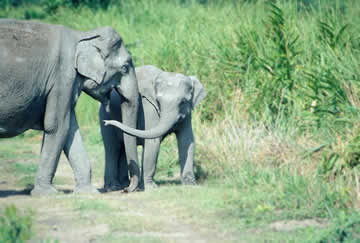
BRITS, South Africa (CNN) -- A custody case set for decision soon by a South African judge pits a wild animal trainer against accusers who claim 30 young elephants in his care are malnourished, dehydrated, covered in wounds and possibly diseased.
Britain's Spice Girls, U.S. rock singer Chrissie Hynde and wildlife experts from around the world are among those who have taken up the cause.
They've appealed to President Nelson Mandela to help return the elephants to neighboring Botswana, where they were captured in the overcrowded Tuli game reserve last year to be trained and sold to circuses and zoos.
The animals, owned by Riccardo Ghiazza of South African-based African Games Services, "have not only been brutally beaten, but they've been psychologically traumatized as well," says Dr. Joyce Poole, an elephant researcher from Kenya. 'They hate and fear the trainers'
She inspected the animals at a compound in Brits, a small farming town outside Pretoria where the elephants are being trained. "They hate and fear the (trainers) so much that they lunge at them and would kill them if they could," she said.
Zoo supdt suspended, panel to plan makeover MUMBAI: A day after the stampede in an enclosure which killed 13 deer, the authorities on Tuesday sacked the Byculla zoo superintendent. The Bombay high court has also converted newspaper reports on the incident into a public interest litigation on the state of affairs in the zoo, said civic officials. Confirming that the deaths were caused by a stampede when some dogs entered the enclosure, civic commissioner Johny Joseph said, "Preliminary enquiry findings show they died of internal injuries and haemorrhage due to crashing against the walls. As per the recommendations of the Central Zoo Authority, we were building a natural moat around the enclosure for the deer. The fence was removed to make way for the moat. A temporary fence was set up closer to the animals. The gap between the bars of the fence was more than necessary which allowed the stray dogs easy entry," said Joseph...
Zoo, aquarium figure runs for N.O. mayor By JOE GYAN JR. New Orleans bureau Published: Feb 15, 2006 NEW ORLEANS — Ron Forman, credited with transforming the city’s zoo from an “animal ghetto” into one of the nation’s finest wildlife attractions and proving naysayers wrong again by building a wildly popular downtown aquarium, said Tuesday he wants to be the mayor who leads New Orleans out of its post-Hurricane Katrina morass. Forman, who took a leave of absence Monday from the Audubon Nature Institute, where he has served as president and chief executive officer since 1977, officially announced his candidacy for mayor Tuesday at the Audubon Tea Room on the Audubon Zoo’s grounds.
MCGM probing death of 12 black bucks at Mumbai Zoo Mumbai, Feb. 14 (PTI): The Municipal Corporation of Greater Mumbai (MCGM) is investigating the death of 12 black bucks at Veer Jeejamata Bhosle Zoo in central Mumbai yesterday, an official said today. Deputy Municipal Commissioner V N Kalam Patil, who is probing the case, said the conclusive report on the episode, including post-mortem report of the blackbucks, along with other inquiries which had been carried out would be submitted to the Municipal Commissioner. The zoo authorities have also sent the viscera samples to the National Institute of Virology in Pune for further investigations, Patil told PTI. Three other injured black bucks were undergoing treatment, he said.
'Amazonia' Coming To Mesker Park Zoo The Amazon is coming to Evansville's Mesker Park Zoo in 2007. The new zoo project, called "Amazonia," will be the largest expansion in the zoo's 75-year history. But first, officials are extending the bidding process before breaking ground. Amazonia will be a 10,000-square-foot South American rain forest, with new animals including monkeys, birds, jaguars and fish which will be able to be viewed underwater. They will all be in a rain forest plant life setting. Visitors will enter through a brand-new complex, and be able to dine at two new restaurants.
2 condors being treated at Phoenix Zoo John Faherty The Arizona Republic Feb. 14, 2006 05:45 PM Linda Cava approached bird 149 slowly because bird 149 is a very special animal. Of course considering the California Condor is one of the most endangered species on the planet, all of them are special. There are a total of 273 alive today and fewer than half of them live in the wild That's what makes bird 149, a nine year-old female, extraordinary. Not only has she thrived in the wild since her release in the late '90s, she is also the mother of a wild condor. A healthy baby born in the wild is a rare and extraordinary event. Last month bird 149 and a three year-old male condor were captured in the Vermilion Cliffs area northeast of the Grand Canyon. They are being treated at the Phoenix Zoo for lead poisoning. The animals will not be on display at the zoo. Preparing to give the condor some medicine Tuesday morning, Cava approached bird 149 with a large net and plenty of caution. Experience has taught Cava that trying to subdue a very large bird in a very small cage is a delicate procedure.
Readers: Elephants aren't meant for zoos Tucson, Arizona Published: 02.15.2006 The following letters are in response to the Feb. 12 column "An enormous dilemma." Better life awaits in Tennessee Thanks to Jim Kiser, who researched the elephant issue looking at what's best for the elephants, not necessarily the City Council or the Reid Park Zoo. It would be nice if all those interests coincided, but clearly, they don't.
Zoo board hires 'anonymous' director Posted: 2/13/2006 10:37:54 PM The Chaffee Zoo has a new director, but we don't exactly know who he is yet. The Zoo has been without a director since November when Donna Fernandes resigned. Board members won’t tell us the new director's name but say he will get things back on track. Board member Sheri Manning-Cartwright told CBS 47, "We wanted a candidate who really is here for the long haul … someone who plans to make Fresno his home." Former zoo director Donna Fernandes speaks highly of her successor.
Barker goes to bat for elephants The director of the Los Angeles Zoo on Saturday disputed game show host Bob Barker's comments about the condition of the zoo's three elephants. Barker on Friday pleaded with the City Council to close the zoo's elephant exhibit, saying the pachyderms lived in misery and that two of the three elephants were ill. "His information was wrong," said John Lewis, the zoo's director.
Newborn giraffe dies in zoo fire By Fiona Govan (Filed: 13/02/2006) A baby giraffe and its mother died when fire broke out at Paignton zoo in Devon last night. Two elephants, a male giraffe and a zoo keeper escaped the flames, which started in straw bedding in an enclosure. Thirty-five firefighters and four appliances were sent to the fire but they were unable to save Kizi, an adult giraffe, and the calf she gave birth to last Monday. The calf had not yet been given a name. The tragedy shocked staff. Phil Knowling, a spokesman for the zoo, said: "It could not be more poignant. After experiencing such happiness over the last few days at the progress of the mother and baby, we have gone to the other extreme and been plunged into a horrible, situation. It is a very grim day for everyone at the zoo." The calf was the fourth to be born to the pair. The first two were rejected by their mother and the third died of heart failure shortly after birth in 2004. Last week Jim Dicks, a senior keeper at the zoo, said that mother and baby were bonding well. "This time she is looking after her youngster and being very attentive and very calm," he said. Neil Bemment, the zoo's curator of mammals, said: "So far everything is going well. We are really pleased that Kizi has at last got the hang of motherhood." The fire service said the cause of the blaze would be fully investigated, adding: "At this early stage it is not thought to be suspicious." A police spokesman said that an investigation had started to establish whether arsonists were to blame. He said: "It is too early to speculate on what started the blaze. Police will await full liaison with the fire investigation team. Until that time, officers at the scene will keep an open mind."
Loss at the zoo A much-anticipated birth ends in surprise and sadness (February 12, 2006) — The death during delivery of Genny C's calf — Genny C is the African elephant who is one of the most popular residents of the Seneca Park Zoo — was an unexpected arrow to the heart of the county's dedicated zoo community and all those who followed the long gestation with rising anticipation. County Executive Maggie Brooks reflected that pain — more acute for the surprise of it — last week when she spoke of the baby's death. She and others had seen this pregnancy and the birth as something positive and uplifting amid the tough issues and problems of day-to-day life. And she was right to see it that way. All babies brings smiles and chase away dark clouds. And a baby elephant — as difficult as elephant reproduction in captivity is — would bring those smiles and more zoo visitors as well. But there is better news on a broader front. The county has built a far more commodious enclosure for Genny C and her roommate, Lilac, adding a third stall for perhaps another elephant down the line. And, one day, perhaps another pregnancy and a successful delivery. Life surely is fragile. But it is persistent, too.
Costly pandas to face US expulsion By Francis Harris in Washington (Filed: 13/02/2006) Panda diplomacy, the cuddly symbol of the West's links with China, was in crisis yesterday after US zoos threatened to expel their expensive guests. Atlanta zoo, in Georgia, and others say they cannot afford the rental fees charged by China: about $2 million (£1.14 million) a year per pair. Each new panda born in America costs the zoos $600,000 on top. The Chinese are making $80 million a year from their American panda rental business. Dennis Kelly, the head of Atlanta zoo, says that if negotiations to cut the fees fail the animals will be declared panda non grata. The zoos say the pandas cost five times more than the next most expensive creature, the elephant. Pandas symbolised the improving links between the US and China after President Richard Nixon was presented with a pair during the first visit of an American leader to communist China in 1972. But the Chinese authorities soon stopped giving the animals as gifts and asked for hard cash.
Malayian Tapir born at Belfast Zoo Belfast Zoo is celebrating the birth of a rare Malayan Tapir. Andrew Hope, Curator of Belfast Zoo said, "This is our fifth surviving calf and he is a huge achievement for all the staff at Belfast Zoo, as we are only one of seventeen zoos in Europe to have these magnificent animals. "There have only been four other Malayan tapir births in the last six months world wide."
Feeding zoo inmates for departed soul UPHOLDING THE philosophy of jeevatma, they fed zoo animals to immortalise their departed loved ones. They found some relief in the unspoken gratitude of speechless creatures. The day after the first death anniversary of their son, the bereaved parent visited zoo on Tuesday to feed the animals. The Gunjan (echo) of their love hear loud on the Valentine’s Day, when the world reaches out to all beloveds. After giving away Rs 18,300 for animal adoption to the Lucknow Zoo in memory of their son Gunjan Dubey who was murdered last year, the old bereaved parent—Lakshmi and KP Dubey—visited zoo to feed animals.
Gulf Coast Zoo's storm stories told on national TV Wednesday, February 15, 2006 When a hurricane comes ablowin', people aren't the only ones put out by nature's wrath. Animals, both wild and domestic, also must cope with the threat of wind and water and the hardship of relocation. So, too, do zoo animals living on the Gulf Coast and right in the strike zone of three recent hurricanes. Tonight, the cable channel Animal Planet begins a 13-part series called "The Little Zoo That Could." It tells the story of the Gulf Coast Zoo in Gulf Shores as zookeepers have had to evacuate more than 200 animals inland, including black bears, Bengal tigers, Capuchin monkeys and other species. The caretakers of these animals have had plenty of practice with this sort of thing, given their experiences with hurricanes Ivan, Dennis and Katrina.
Russia's skier wins gold in men's cross-country pursuit race TURIN, February 12 (RIA Novosti) - Yevgeny Dementyev of Russia won the men's 30-km pursuit race in the cross-country skiing at the Turin Winter Olympics Sunday. The silver medal went to Frode Estil of Norway (0.6 seconds behind Dementyev) and Pietro Piller Cottrer of Italy took the bronze. Giorgio Di Centa of Italy who led the race several hundred meters before the finish came in fourth. Dementyev won the first gold medal for the Russian team in Turin. Earlier, Yevgeniya Medvedeva-Arbuzova of Russia won the bronze medal in the women's 15-kilometer pursuit.
http://en.rian.ru/sports/20060212/43497108.html Russia's skier wins bronze in women's cross-country pursuit race TURIN, February 12 (RIA Novosti) - Yevgeniya Medvedeva-Arbuzova of Russia won the bronze medal in the women's 15-kilometer pursuit Sunday. The gold medal went to Kristina Smigun of Estonia who overtook silver medalist Katerina Neumannova from the Czech Republic, finishing in 42 minutes, 48.7 seconds - 1.9 seconds ahead of Neumannova. Medvedeva-Arbuzova was 14.5 seconds behind the new Olympic champion. Russia's Olga Zavyalova finished seventh (35 seconds behind Smigun) and Yulia Chepalova finished ninth (50.8 seconds behind Smigun). Opening ceremony of the Olympic Winter Games in Italy. The bestepisodes.
No doping involved in Russian skier's suspension - official MOSCOW, February 10 (RIA Novosti, Olesya Karpova) - A Russian sports official ruled out any hint of doping after a skier was suspended for five days Friday in the first whiff of scandal at the start of the 2006 Winter Olympics. Cross-country competitor Natalia Matveyeva was found to have a high level of hemoglobin, the red substance in the blood that combines with oxygen to take it round the body, after a blood-test.
Russian sports chief puzzled by Olympic village ban MADRID, February 10 (RIA Novosti) - Russia's top sports official has been left facing a predicament after the nation's Olympic committee refused to grant him accreditation to visit Russian athletes at their base for the Turin Games. "I do not understand the reasons behind this decision," said an astonished Vyacheslav Fetisov, the head of the Federal Agency for Physical Culture and Sport, prior to leaving for the 2006 Winter Olympics. It is not the first time that Fetisov, who is regarded as the country's unofficial sports minister, has been denied contact with Russian athletes in the Olympic Village. He was refused accreditation during the 2004 Summer Olympics in Athens, and had to meet with athletes outside sports facilities.
Russians need strong medical support at Olympics - Putin MOSCOW, February 6 (RIA Novosti) - Russian President Vladimir Putin said Monday that his country's Olympic team should be provided with strong medical, administrative and legal support at the upcoming games in Italy. Putin met Monday with President of the Russian Olympic Committee (ROC) Leonid Tyagachyov and head of the organizing committee for the Olympics in Turin, Deputy Prime Minister Alexander Zhukov, to discuss the prospects for the Russian team at the 2006 Winter Olympics on February 10-26. Putin said athletes should not think about doping issues and just focus on their performances, while the ROC handles other issues.
Uzbek sportsmen promised riches for Olympic gold TASHKENT, February 7 (RIA Novosti, Abu-Ali Niyazmatov) - The government of Uzbekistan has promised substantial rewards for the country's Winter Olympic competitors in the event that they finish on the podium in their respective disciplines. With the opening ceremony of the Turin Games only days away, the Uzbekistan Olympic Committee said Tuesday that $100,000 would be paid for any gold medals, $50,000 for silver and $25,000 for bronze, which is an enormous sum for a country that has an estimated per capita GDP of only $1,900 in terms of purchasing power parity.
Putin supports Sochi Olympic bid MOSCOW, January 31 (RIA Novosti)-Russia will support the application made by the Black Sea city of Sochi to host the 2014 Winter Olympics, the president said Monday. Vladimir Putin told a Kremlin news conference that the country needed modern infrastructure and recreational facilities. "Sochi is the prefect place," he said. "It has a mild climate, the sea is near and there are places with snow all year round in the mountains. I skied there two years ago myself."
NBC to televise Olympics 24.5 hours a day February 10, 2006 BY DAVID BAUDER ASSOCIATED PRESS PASADENA, Calif.-- There aren't enough hours in the day to watch all the Winter Olympics coverage that NBC and its cable partners are serving up. Seriously. Even if you want to watch someone hurtling headfirst down a mountain or actually know what the biathlon is, it's impossible to see it all live. NBC's planned 416 hours of coverage (including the broadcast network and cable outlets) from Turin, Italy, averages out to 24.5 hours a day. "We are reinventing the clock," said David Neal, executive producer of NBC Sports. The Winter Games open Feb. 10 and competition stretches for 16 days after that. NBC executives are privately trying to downplay ratings expectations, given that Olympics on U.S. snow and ice-- like Salt Lake City in 2002-- tend to draw more interest. But they're hoping a strong United States team will spike the TV turnout.
10 reasons to watch these Olympics 10. Women’s hockey. There are the times the U.S.-Canada rivalry has enough enmity to make Alabama-Auburn look like a PTA meeting. It’s a lock they’ll meet for the gold medal. The Americans won last year’s world championship in a shootout, after regulation and overtime had gone 0-0. Since then, the Canadians have won eight of 10 meetings. The gold medal game may be the closest you ever come to seeing a bunch of young ladies with brass knuckles. 9. Jeremy Bloom. The NCAA made him give up football at the University of Colorado because he had to earn sponsor money to keep his freestyle skiing career alive. He’ll be the only Olympian in Italy trying to win a gold medal, and then returning home for the NFL draft combine.
Olympics 'contribute to peace' Pope Benedict XVI said he hoped the Turin Winter Olympics would bring out a spirit of fairness and fraternity and help contribute to peace in the world. Benedict also sent a special greeting to the athletes and organisers of the games during his traditional Sunday blessing to tourists and the faithful who gathered under his studio window in St Peter's Square in Rome.
Grandma Luge crashes out 'Grandma Luge' Anne Abernathy was forced to pull out of the Winter Olympics after a heavy crash in training, organisers said today. Abernathy, 52, broke her wrist while she also smashed the right runner of her sledge after crashing "hard" in her fifth training run. Abernathy was hoping to take part in her sixth Olympics as the first woman in her fifties at a Winter Games. "Even if you have a little doubt, if someone is not on top of their game and they are going to fly down the track at 90mph (145km/h), you have to be pretty sure they are OK," said Melita Glanville, the trainer who has worked with Abernathy for six years. Abernathy made her Olympic debut for the US Virgin Islands in 1988 at Calgary. Although she has never been a serious medal threat, Abernathy, a cancer survivor, is popular with the sport's fans and her fellow athletes. The former professional entertainer has won widespread respect for beating cancer, serious head injury and even a hurricane that destroyed her Virgin Islands home. At these games, Abernathy had been wearing a green racing suit and a red helmet. "I kind of look like a Christmas tree," she said following a practice run on Friday. "The red helmet is in honour of women over 50 . . . that we can go out and do what we want to do. It's a big deal for a lot of women that someone over 50 is going out there and doing it." The runners on Abernathy's sled also sustained serious damage in the wreck on the speedy 19-curve track at Cesana, which has thwarted several sliders in recent days. The daunting Cesana Pariol course has already claimed a number of victims after opening last year and had to be closed to luge for modifications. The women's luge competition opens tonight AEST.
White wins men's halfpipe of Turin Olympics American Shaun White cruised to the gold medal in the men's halfpipe snowboard at the Turin Winter Olympics on Sunday. It was another dominating day in snowboarding for the Americans, who fell one bronze medal short of repeating their historical sweep of 2002. White claimed the title with 46.8 points, fellow American Danny Kass took the silver at 44.0, while Finland's Markku Koski won the bronze at 41.5. "It's amazing. There are so many people here, there are so many strong rivals, but I did it so well," said the 20-year-old White with tears in his eyes. "I don't want to cry, but those tears run outside themselves. I can't control them. I didn't know if I would get the gold, I just knew I wanted it. This is the best year of my life. I'm so happy my whole family is here. I know I won't have this again," said White. Competitors have to take two runs in the final and are ranked according to their best score of two runs, but White didn't need a second run as his amazing first run with a back-to-back 1080s landing, which earned him 46.8 points, was good enough for a gold medal. He only managed 26.6 points in his second routine run. White, nicknamed "Flying Tomato" for his longish red hair, had a nightmare start on earlier Sunday as he missed one of the six automatic berths into the final after he landed badly in his first qualifying run. He then rebounded with an excellent second qualifying run to move on to the final round. After his winning first final run, White waited and watched the other 11 riders take their second trips. Nobody could better his score after the second-to-last rider, Koski, fell on his final jump. White knew he had the gold in hand. "It's insane. After that first run I had to see how it would hang out for me. I knew I had to do my best run," said White, who claimed the titles of superpipe and slopestyle in 2006 Winter X- Games. Kass led the 12 riders after the qualifying runs but failed in the first final run as he only managed 20.8 points. However, he did a wonderful job in the second and collected 44.0 points for the second place, beating Koski, who scored 41.5 in the first run, into the third place. Koski tried to save his silver medal in the second run, but only had 31.4 points. World champion Antti Autti of Finland, who was second after the qualifying stage, only finished fifth with 39.1 points.
Luge: Italy claims it's first gold medal of 2006 Olympics By KurtKragthorpe The Salt LakeTribune CESANA PARIOL, Italy - Armin Zoeggeler did it again, Tony Benshoof barely missed doing something special and Georg Hackl did not do what he usually does. All of the above was big news in luge Sunday night, when the host country claimed its first gold medal of the 2006 Olympics in men's singles. Zoeggler's victory over Russia's Albert Demtschenko was not unexpected, considering he won at the Utah Olympic Park in 2002 and was the favorite on his home track. So going into the second day of competition, the developing story centered around Benshoof, a Minnesotan who was shooting for America's first singles medal in luge. He was in third place after Saturday's two runs. But his opening run Sunday cost him that position, and he lost a little more ground to Latvia's Martins Rubenis in the final run. Benshoof was naturally Advertisement disappointed with his third run but still described himself as "happy with fourth place" after finishing 17th in 2002. There's no medal for it this time, as there ordinarily would be, but Benshoof can say he beat Hackl. The 39-year-old German, trying for his sixth Olympic medal since 1988, was third after the first run but dipped to seventh. Hackl will retire with two golds and two silvers. David Moeller, considered the top German contender in a sport his country has dominated, posted the fastest time in the final run but settled for fifth.
Winter Olympics day two round-up French skier Antoine Deneriaz won a shock downhill gold after a stunning late run, while Scots Finlay Mickel and Roger Cruickshank were down the field. South Korean Ahn Hyun-Soo took the men's short track 1,500m as rival Apolo Anton Ohno slid out of the semi-finals. American Shaun White won the snowboard half-pipe, but Britain's Dan Wakeham failed to reach the final.
Winter Olympics schedule - 13 February Daily event schedule for the Winter Olympics including BBC coverage details. Daily event schedule for the Winter Olympics including BBC coverage details. All times GMT. MONDAY FEBRUARY 13 BBC COVERAGE Television BBC TWO - 1230-1600, 2030-2230* Interactive TV - Three video streams 0800-0000* BBCSport 7-day programme guide
Radio - Five Live updates through the day (* Times subject to late change) EVENT SCHEDULE
Curling Men's Round Robin, Session 1 Sheet A - New Zealand v Sweden, 0800 Pinerolo Palaghiaccio Men's Round Robin, Session 1 Sheet B - Italy v Great Britain, 0800 Pinerolo Palaghiaccio Men's Round Robin, Session 1 Sheet C - Norway v United States, 0800 Pinerolo Palaghiaccio Men's Round Robin, Session 1 Sheet D - Finland v Switzerland, 0800 Pinerolo Palaghiaccio
Women's Round Robin, Session 1 Sheet A - Norway v United States, 1300 Pinerolo Palaghiaccio Women's Round Robin, Session 1 Sheet B - Canada v Sweden, 1300 Pinerolo Palaghiaccio Women's Round Robin, Session 1 Sheet C - Switzerland v Italy, 1300 Pinerolo Palaghiaccio Women's Round Robin, Session 1 Sheet D - Great Britain v Denmark, 1300 Pinerolo Palaghiaccio
Men's Round Robin, Session 2 Sheet A - Germany v Canada, 1800 Pinerolo Palaghiaccio Men's Round Robin, Session 2 Sheet B - Finland v United States, 1800 Pinerolo Palaghiaccio Men's Round Robin, Session 2 Sheet C - Great Britain v New Zealand, 1800 Pinerolo Palaghiaccio Men's Round Robin, Session 2 Sheet D - Italy v Sweden, 1800 Pinerolo Palaghiaccio
Snowboard Ladies' Halfpipe Qualification Run 1 0900 Bardonecchia Ladies' Halfpipe Qualification Run 2 1000 Bardonecchia Halfpipe Final Run 1 1300 Bardonecchia Ladies' Halfpipe Final Run 2 1335 Bardonecchia Biathlon Women's 15 km Individual 1100 Cesana San Sicario
Ice Hockey Women's Prelim. Round - Group A Game 7 - Sweden v Italy, 1400 Torino Esposizioni Women's Prelim. Round - Group B Game 8 - Finland v Switzerland, 1630 Palasport Olimpico
Speed Skating Men's 500 m Race 1 1430 Oval Lingotto Men's 500 m Race 2 1623 Oval Lingotto
Powerful opening ceremony a reminder that Olympic Truce goes unheeded BY ANN KILLION San Jose Mercury News TURIN, Italy - They marched in under the five rings, separated by white signs and invisible borders. Wearing different uniforms, waving different flags, arriving in different shades and sizes, with different beliefs and backgrounds. But, ultimately, at Friday night's opening ceremony, the Olympic athletes stood together, shoulder to shoulder, arm in arm, in a mosh pit of humanity. They danced together, made the "YMCA" gestures together, laughed, cheered and wept a little together. It was, as always, one of the most powerful moments in sports. No matter what you think of these "16 days of glory," the march of the athletes is profound. It is a moment that isn't marred by Olympic commercialism or controversy. Even rebel skier Bode Miller found it worth his time. Both symbol and promise, the march of the athletes is one of the few instances when the world truly comes together. A time when Israel and Iran stand side by side. When Kenya is cheered as loudly as the United States. When everyone is a little Slovakian, a little Swedish, a little Chilean - and, this year, a whole lot Italian.
The world unites, and it pleads for peace Ann Killion Mercury News Staff Columnist TURIN, Italy - They marched in under the five rings, separated by white signs and invisible borders. Wearing different uniforms, waving different flags, arriving in different shades and sizes, with different beliefs and backgrounds. But, ultimately, at Friday night's opening ceremony, the Olympic athletes stood together, shoulder to shoulder, arm in arm, in a mosh pit of humanity. They danced together, made the ``YMCA'' gestures together, laughed, cheered and wept a little together. It was, as always, one of the most powerful moments in sports. No matter what you think of these so-called 16 days of glory, the march of the athletes is profound. It is a moment not marred by commercialism or controversy. Even rebel skier Bode Miller found it worth his time. Both symbol and promise, the march of the athletes is one of the few instances when the world truly comes together. A time when Israel and Iran stand side by side. When Kenya is cheered as loudly as the United States. When everyone is a little Slovakian, a little Swedish, a little Chilean -- and, this year, a whole lot Italian. The scene was the embodiment of the Olympic ideal, a principle clearly expressed by Jacques Rogge, president of the International Olympic Committee. ``Our world today is in need of peace, tolerance and brotherhood,'' Rogge said in English, one of the three languages he used during his speech. ``The values of the Olympic Games can deliver these to us. May the Games be held in peace, in the true spirit of the Olympic Truce.'' Sadly, the Olympic Truce is heeded about as seriously as the American quest for alternative energy forms. The leaders of the world pay lip service to the concept, invoking it only when it serves their purposes. Several of the nations participating, including the host, had thousands of troops in Iraq as Friday's ceremony unfolded. The death toll in our own country steadily mounts. The protests in the Muslim world against Denmark and other European nations continue to rage. The Danish delegation had a special police escort on Friday. Iran is aggressively defying the world on nuclear weapons. Last month, United Nations Secretary-General Kofi Annan made yet another plea for the Olympic Truce. It is an idea with roots in ancient Greece, when the ekecheiria gave peace and immunity for all traveling to the Games. It was revived in 1991 in the midst of the conflict in the former Yugoslavia, but it has yielded precious few tangible results. ``The period of the Olympics Games is obviously not long enough for us to believe that we can use it to establish lasting peace,'' Annan said. ``It is, however, a chance for protagonists to look around, see how they are destroying their countries and take the chance to explore other options.'' That was the opportunity presented once again Friday night inside the refurbished Stadio Olimpico, originally built in 1932 on orders from Benito Mussolini and eventually stripped of his name. As first lady Laura Bush looked on, along with her British counterpart, Cherie Blair, and other international dignitaries, the innocent concepts of brotherhood and unity were invoked time and again. Turin is the largest city to be host to the Winter Olympics, and it showed its best side. For the first time this week, the Alps revealed themselves from beneath the haze, ringing the city. And inside the stadium, the host city reminded us that despite the drab industrial look of things, we are indeed in Italy, the land of Puccini and Dante, Michelangelo and Botticelli. The ceremony was a tribute to Italia, to the snow-capped peaks and to athletics. There were Armani gowns. A revving Ferrari. A quintessential Italian stallion -- Alberto Tomba -- carrying the torch into the stadium. The famed tenor Luciano Pavarotti filled the stadium with his soaring voice. Sophia Loren was one of a delegation of eight women who carried the Olympic flag into the stadium (others were American actress Susan Sarandon and Chilean author Isabel Allende). But an overriding theme was peace. Circus climbers dressed in white formed a human dove. Yoko Ono was on hand to recite an ode to peace, and Peter Gabriel performed her husband's famous ballad ``Imagine.'' ``Imagine there's no countries,'' he sang, looking out over the athletes from every corner of the globe squished into one circle. ``It's easy if you try.'' Is it naive to think that snowboarders and lugers could really be a force for world peace? Sadly, it probably is. War rages on, and mere Games cannot slow its pace. ``You can show us a world,'' Rogge told the athletes, ``we all long for.'' If we're willing to see it.
The Cheney Observer also known as "They Only Talk the Talk"
Katrina & Recovery Timeline: Who Knew When the Levees Broke
A Texas Army National Guard helicopter deposits a 6,000 pound-plus bag of sand and gravel to try to close the breach in the 17th Street Canal, Sept. 4, 2005. U.S. Army Corp of Engineers photo by Alan Dooley “White House officials confirmed… that the report of the levee break arrived there at midnight.” Sen. Frank Lautenberg (D-NJ), Feb. 10, 2006 New Orleans residents are evacuated from their homes by a FEMA search and rescue team, Aug. 31, 2005. Photo by Jocelyn Augustino/FEMA NPR.org, February 10, 2006 · A timeline released by congressional investigators shows that 28 federal, state and local agencies reported problems with levees the day Katrina made landfall in New Orleans. The information is at odds with contentions from Bush administration officials who say they didn't learn about the levee failures until the following day.
MONDAY, AUG. 29, 2005 8:30 a.m.: FEMA's regional office is informed that "a twenty-foot tidal surge… came up and breached the levee system in the canal."
9:08 a.m.: A brief from the Transportation Security Administration notes that the Industrial Canal levee has been breached. "There is heavy street flooding throughout Orleans, St. Bernard, and Jefferson parishes," the brief notes. A senior watch officer at the Homeland Security Operations Center receives the brief at 11:41 a.m.
9:14 a.m.: A flash flood warning from the National Weather service notes: "A levee breach occurred along the Industrial Canal… 3-8 feet of water is expected."
9:36 a.m.: FEMA coordinator Matthew Green e-mails FEMA's Michael Lowder, deputy director of response, that the Industrial Canal Levee has failed.
10 a.m.: Department of Homeland Security adviser Louis Dabdoub sends an e-mail to officials at Homeland Security and its main operation center. It reads: "It is getting bad. Major flooding in some parts of the city. People are calling in for rescue… The bad part has not hit here yet."
10:12 a.m.: Michael Heath, special assistant to then-FEMA chief Michael Brown, sends an e-mail to FEMA's chief of staff and acting director that reports: "Severe flooding in the St. Bernard/Orleans parish line... People are trapped in attics." 11:51 a.m.: Heath sends an e-mail to Michael Lowder, FEMA's deputy directory of response, informing him that the 17th Street Canal has been breached, as reported by Marty Bahamonde, a FEMA official on the ground in New Orleans. Brown responds: "I'm being told here water over not a breach."
12 p.m.- 5 p.m.: Levee breaches are reported by, among others, the Louisiana State Police, the National Weather Service, the Army Corps of Engineers and the Louisiana Office of Homeland Security. 6 p.m.: A report from the Homeland Security Operation Center says: "Preliminary reports indicate the levees in New Orleans have not been breached."
6:08 p.m. The American Red Cross e-mails officials at the White House and Department of Homeland Security about reports of levee breaches and "extensive flooding" in the Lower Ninth Ward and St. Bernard Parish.
9 p.m.: Appearing on CNN, then-FEMA Chief Michael Brown says: "We have some, I'm not going to call them breaches, but we have some areas where the lake and the rivers are continuing to spill over."
9:29 p.m.: John Wood, chief of staff for Homeland Security Secretary Michael Chertoff, is sent an e-mail that reads in part: "the first (unconfirmed) reports they are getting from aerial surveys in New Orleans are far more serious than media reports are currently reflecting."
10:30 p.m.: A Homeland Security situation report reads: "There is a quarter-mile [breach] in the levee near the 17th Street Canal… an estimated 2/3 to 75% of the city is under water… a few bodies were seen floating in the water." This report reaches the White House around midnight, according to congressional investigators.
11:05 p.m.: Michael Jackson, deputy secretary of Homeland Security, is sent an e-mail summarizing reports of the extensive flooding that followed the collapse of the 17th Street Canal levee. The reports had been submitted by Marty Bahamonde, a FEMA official on the scene, beginning at 10:12 a.m. that day.
TUESDAY, AUG. 30, 2005 6 a.m.: A Homeland Security situation report states that the Industrial Canal and 17th Street Canal levees have been breached. It says: "Much of downtown and east New Orleans is underwater, depth unknown at this time… Widespread and significant flooding has occurred throughout the city." Source: Senate Committee on Homeland Security and Governmental Affairs (See the full timeline released by the Senate committee.)
Shaking The House Of Cards By BOB HERBERT (NYT) 771 words Published: October 3, 2003 No wonder the sky-high poll numbers for President Bush have collapsed. The fiasco in Iraq is only part of the story. The news on one substantive issue after another could hardly be worse. It's almost as if the president had a team in the White House that was feeding his credibility into a giant shredder. Despite the administration's relentlessly optimistic chatter about the economy, the Census Bureau reported that the number of Americans living in poverty increased by 1.7 million last year, the second straight annual increase. During those two years, the number of poor Americans has grown by 3 million. Belt-tightening is also in order for the middle class. The median household income declined by 1.1 percent, a drop of about $500, to $42,400. It was the second straight year for a decline in that category as well. Per capita income decreased, too. It dropped by 1.8 percent, to $22,794 in 2002, the first decline in more than a decade. Boom times these ain't. On Monday we learned that there had been a steep increase last year -- the largest in a decade -- in the number of Americans without health insurance. The international outplacement firm Challenger, Gray & Christmas is reporting that job losses in the U.S. have resulted in a sharp decline in the number of dual-income families, particularly for those with children under 18. And so on. With the federal government piling up massive deficits and local governments struggling to provide the most basic of services (some areas are closing schools; others are releasing prisoners prematurely), Mr. Bush is asking the nation to go much further into debt in the service of some vague notion of a civic renaissance in Iraq. Even Republicans are beginning to ask what the heck is going on. Contributing to the growing sense of unease in some quarters and outrage in others is the blatant war profiteering in Iraq by politically connected firms like Bechtel and Halliburton -- profiteering that is taking place with the scandalous encouragement and connivance of the Bush administration. A front-page article in The Times on Tuesday said: ''A group of businessmen linked by their close ties to President Bush, his family and his administration have set up a consulting firm to advise companies that want to do business in Iraq, including those seeking pieces of taxpayer-financed reconstruction projects.'' Iraq is proving to be a bonanza for the Bush administration's corporate cronies even as it is threatening to become a sinkhole for the aspirations of ordinary Americans. The vicious release to news organizations of the identity of an undercover C.I.A. officer could serve as a case study of the character of this administration. The Bush II crowd is arrogant, venal, mean-spirited and contemptuous of law and custom. The problem it faces now is not just the criminal investigation into who outed Valerie Plame, but also the fact that the public understands this story only too well. Deliberately blowing the cover of an intelligence or law enforcement official for no good reason is considered by nearly all Americans, regardless of their political affiliations, to be a despicable act. According to an ABC-Washington Post poll, nearly 70 percent of Americans believe a special counsel should be appointed to investigate the leak. Now that so much has gone haywire -- Iraq, the economy, America's standing in the world -- the tough questions are finally being asked about President Bush and his administration. Perhaps foreign policy was not Mr. Bush's strength, after all. And even diehard Republicans have been forced to acknowledge that the president was surely wrong when he insisted that his mammoth tax cuts would be the engine of job creation. And nothing has ever come of Mr. Bush's promise to be the education president, or to change the tone of the discourse in Washington, or to deal humbly and respectfully with the rest of the world. Americans are increasingly asking what went wrong. How could so much have gone sour in such a short period of time? Was it incompetence? Bad faith? Loud warnings were ignored for the longest time. Now, finally, the truth is becoming more and more difficult to avoid.
THE STRUGGLE FOR IRAQ: ASSESSMENT; A Reckoning: Iraq Arms Report Poses Test for Bush By DAVID E. SANGER (NYT) 1039 words Published: October 3, 2003 The preliminary report delivered on Thursday by the chief arms inspector in Iraq forces the Bush administration to come face to face with this reality: that Saddam Hussein's armory appears to have been stuffed with precursors, potential weapons and bluffs, but that nothing found so far backs up administration claims that Mr. Hussein posed an imminent threat to the world. In public, President Bush says that is not the issue. What should make a difference to Americans, and to the world, he says, is that Mr. Hussein is gone and Iraq is free. ''One thing is for certain,'' Mr. Bush argued last month at a fund-raiser, using a line he repeats often these days. ''Terrorist groups will not ever be able to get weapons of mass destruction in Iraq because Saddam Hussein is no more.'' But in private, Mr. Bush's political aides concede that it does matter, and it may matter more as the politics of running for president collide with the realities of containing the chaos in occupied Iraq. While the report by the arms inspector, David Kay, is not final, and while the inspectors may yet come upon a cache of weapons, the preliminary findings support the claims of critics, including Democratic candidates, that Mr. Bush used dubious intelligence to justify his decision to go to war. At worst, these critics say, the usual caveats and cautions of the underlying intelligence reports were ignored in the rush to war. Without question, the gap between what Mr. Bush said existed in Iraq and what Dr. Kay has failed to find will be argued about again and again as Americans discuss whether it was right to go into Iraq in the first place, and debate what to do now. ''This presents the president with a huge problem'' of explaining why the weapons have not been found, said Lee H. Hamilton, a former Democratic congressman from Indiana and now the president of the Woodrow Wilson International Center for Scholars in Washington. ''He and his aides have said over and over again that they will find'' unconventional weapons. ''They cannot say that anymore in light of the evidence.'' Mr. Hamilton, who dealt with intelligence issues in Congress, said the problem went beyond politics: it raised questions about whether intelligence could be trusted and used to rally the world to confront the North Korean and Iranian nuclear weapons programs. Should Mr. Bush or his successors make a new argument for a pre-emptive strike against any country suspected of amassing arms, ''persuading the world will be that much harder,'' Mr. Hamilton said. Several of Mr. Bush's advisers and associates, speaking under the cover of anonymity, said the issue of what weapons Mr. Hussein possessed would have far less political relevance if the occupation was going smoothly. But it is not. The effect on voters is evident: a New York Times/CBS News poll released Thursday shows that public approval for how Mr. Bush is handling Iraq has now dropped to 47 percent, down from 75 percent in the midst of the heavy fighting. That is a sign, as one of Mr. Bush's senior aides said Thursday, that ''we have a lot of work to do.'' In retrospect, warning signs were evident well before the war began. There was the running dispute last winter with the International Atomic Energy Agency over the question of whether specialized tubes were intended for Iraqi nuclear centrifuges. In January President Bush argued that Mr. Hussein was seeking uranium in Africa -- a statement that was questioned at the time, discredited this summer and led this week to the first criminal investigation of the Bush White House, revolving around leaks that might have been intended to silence critics. Secretary of State Colin L. Powell, more careful about his claims than the president or the vice president, deleted any mention of the uranium from his presentation to the United Nations on Feb. 5. But now even Mr. Powell's case has come under question. He made much of the mobile biological weapons laboratories that Mr. Hussein was supposed to be using; Dr. Kay's report said, ''We have not yet been able to corroborate the existence'' of a mobile biological weapons effort. Dr. Kay paints a picture of a dictator who would be pleased to develop biological and chemical weapons, some complex and others ''small and relatively unsophisticated.'' But a similar case could be made about dictators in many other nations, including some that appear to be far ahead of Iraq. Part of Mr. Bush's task now is to explain why he has not raised the alarm about them as vociferously. For the Democratic candidates, part of their task is to question whether going to war made sense -- without seeming to suggest that the world would be a better place if Mr. Hussein were still in power. Dr. Kay's report offers a rationale for going ahead with the weapons search, at a cost that the administration believes will run to $600 million. Even if no caches of chemical, biological or nuclear weapons are found, Dr. Kay said, the search will provide lessons on how to improve ''the quality of intelligence.'' And even if there is ''only a remote possibility'' that aged weapons still exist, he said, it is vital to keep them out of the wrong hands. Those reasons do little to help Mr. Bush as he, in Mr. Hamilton's phrase, ''revises his list of reasons for going to war.'' Ex post facto explanations of war are difficult anytime. They are even more difficult in the midst of an unpopular occupation, more difficult and dangerous than the one the United States led in Japan and Germany in 1945, and fraught with political dangers for Mr. Bush in 2004.
Poll Shows Drop in Confidence On Bush Skill in Handling Crises By TODD S. PURDUM AND JANET ELDER (NYT) 2069 words Published: October 3, 2003 The public's confidence in President Bush's ability to deal wisely with an international crisis has slid sharply over the past five months, the latest New York Times/CBS News Poll has found. And a clear majority are also uneasy about his ability to make the right decisions on the nation's economy. Over all, the poll found, Americans are for the first time more critical than not of Mr. Bush's ability to handle both foreign and domestic problems, and a majority say the president does not share their priorities. Thirteen months before the 2004 election, a solid majority of Americans say the country is seriously on the wrong track, a classic danger sign for incumbents, and only about half of Americans approve of Mr. Bush's overall job performance. That is roughly the same as when Mr. Bush took office after the razor-close 2000 election. But more than 6 in 10 Americans still say the president has strong qualities of leadership, more than 5 in 10 say he has more honesty and integrity than most people in public life and 6 in 10 credit him with making the country safer from terrorist attack. By contrast, the Democratic presidential contenders remain largely unknown, and nearly half of Americans -- and a like number of registered voters -- say the Democrats have no clear plan of their own for the country. A summer of continuing attacks on American soldiers in Iraq, the failure so far to find weapons of mass destruction there and Mr. Bush's recent request for $87 billion to pay for military operations and reconstruction in Iraq and Afghanistan have taken a toll on public support for his administration's Iraq policy and on views of his ability to handle such issues in general. The poll found that just 45 percent of Americans now have confidence in Mr. Bush's ability to deal wisely with an international crisis, down sharply from 66 percent in April, and half now say they are uneasy about his approach. Nearly 9 in 10 Americans say the war in Iraq is still going on, and 6 in 10 say the United States should not spend as much on the effort as Mr. Bush has sought. Three-quarters of Americans, including a majority of Republicans, say the administration has yet to clearly explain how long American troops will have to stay in Iraq, or how much it will cost to rebuild the country. ''I am very uneasy because of the war,'' said Joyce Austin, 69, a retired nurse's aide in Readstown, Wis., who was reinterviewed after the poll was conducted. ''I don't think the Bush administration had a good plan for ending the war, and for what was going to happen afterward. I don't think they realized how much it was going to cost.'' Mrs. Austin paused and added, ''Maybe they knew and just didn't tell us.'' The nationwide telephone poll of 981 adults has a margin of sampling error of plus or minus three percentage points. The poll, taken Sunday through Wednesday, was in progress when the Justice Department announced that it would investigate accusations that someone in the White House may have leaked the name of an undercover C.I.A. officer. As the week progressed and news coverage of the investigation intensified, respondents were somewhat less likely to credit the Bush administration with bringing heightened honesty and integrity to the workings of the White House, compared with past administrations. In the end, just over one-third of the respondents said the administration had brought more honesty and integrity, while 18 percent said it had brought less and 43 percent said it was about the same as other administrations. For months, Americans have been critical of Mr. Bush's handling of the national economy, and they remain so, with just one in five saying the administration's policies have made their taxes go down and a near-majority saying the policies have had no effect on them personally. Half of the respondents said the federal tax cuts enacted since 2001 had not made much difference in the economy, and the rest were about evenly divided on whether the tax cuts were bad or good. Just 40 percent of voters expressed confidence in Mr. Bush's ability to make the right decisions about the economy, down from half in April, while 56 percent said they were uneasy, up from 42 percent in April. During Mr. Bush's tenure, a majority of Americans say, jobs have been lost and not created, there has been no easing of the high cost of prescription drugs and schools have not improved. Six in 10 Americans -- and 4 in 10 Republicans -- say the economy is worse than it was when Mr. Bush took office. Four in 10 of those polled were worried that someone in their household would lose his job in the next year. Even worse news for the president was that Americans have also become critical of his handling of foreign policy, which had been been seen as his strength for most of his presidency. The latest survey found that 44 percent of those polled approved of Mr. Bush's overall handling of foreign policy, down from 52 percent in July, and that 47 percent approved of his handling of the situation in Iraq, down from 58 percent in July. Polls last winter showed that public support for the president's decision to go to war in Iraq was sharply divided along partisan lines, with broad indications of reluctance. Now there are growing doubts about whether the results were worth the loss of life and other costs involved. Only 41 percent said it was, while 53 percent said it was not. When the question was asked using Saddam Hussein's name, the results were almost reversed, with about half those surveyed le saying it was worth removing him from power, and 41 percent saying it was not. Over all, 51 percent of the respondents approved of Mr. Bush's performance. That is down from the high 80's after the Sept. 11 attacks, and from the high 60's at the beginning of the Iraq war. Just over 4 in 10 voters now have a favorable opinion of the president, compared with more than 6 in 10 in mid-2002, and just over 3 in 10 now have an unfavorable opinion compared with 2 in 10 in July 2002. Nearly half said they believed that removing Mr. Hussein from power was the main reason for taking military action in Iraq. About a quarter said the main reason was to protect the oil supply, and one-fifth said the goal was to stop Iraq from manufacturing weapons. But only about 4 in 10 said they now believed that Mr. Hussein was personally involved in the Sept. 11 attacks, compared with about 5 in 10 who said so in April. More than half of Americans said relations between the United States and its European allies were worse than when Mr. Bush took office, and fewer than half said leaders of other countries around the world had respect for Mr. Bush. Mary Preble, 46, a registered nurse and a Republican in Sugar Land, Tex., said: ''I don't feel George W. Bush has a grasp on what the public is really interested in.'' She added: ''I wasn't happy about the invasion in Iraq. We shouldn't have attacked before anything was proven. There seem to be no nuclear weapons. ''Right now he is trying to rally everyone around to the cause and give money to rebuild Iraq. But why should other countries kick in cash when he didn't wait until the U.N. said we're behind you? The other countries don't believe he has the leadership skills he should have.'' The poll showed an electorate that remains narrowly divided. When all registered voters were asked whom they would vote for next year, 44 percent said Mr. Bush and 44 percent said the Democratic candidate. But regardless of how they intend to vote, half of registered voters said they expected Mr. Bush to win. While Mr. Bush's standing has fallen, the poll showed that the Democratic presidential contenders are still largely unknown, and a majority of those who are planning to vote in their states' Democratic primaries or caucus next year have not formed opinions of the candidates. Opinions of Democratic primary voters are so unformed that the mere mention of a person's title changes the dynamic. When voters were asked which candidate they would choose, without mention of titles, 17 percent said Gen. Wesley K. Clark, 11 percent said Representative Richard A. Gephardt of Missouri and 10 percent said Senator Joseph I. Lieberman of Connecticut. The other candidates were all in single digits. ''I think the Democrats have a plan, but I'm not sure what it is,'' Laurel Halsey, 34, a personnel manager in Oakland, Calif, said. ''The Democrats' plan is never as clear as the Republicans' because the Republicans focus on the very narrow goal of laissez-faire government and capitalism. The Democrats try to incorporate a broader base of social issues.'' How the Poll Was Conducted The latest New York Times/CBS News Poll is based on telephone interviews conducted Sunday through Wednesday with 981 adults throughout the United States. The sample of telephone exchanges called was randomly selected by a computer from a complete list of more than 42,000 active residential exchanges across the country. Within each exchange, random digits were added to form a complete telephone number, thus permitting access to listed and unlisted numbers alike. Within each household, one adult was designated by a random procedure to be the respondent for the survey. The results have been weighted to take account of household size and number of telephone lines into the residence and to adjust for variation in the sample relating to geographic region, sex, race, age and education. In theory, in 19 cases out of 20, the results based on such samples will differ by no more than three percentage points in either direction from what would have been obtained by seeking out all American adults. For smaller subgroups the margin of sampling error is larger. In addition to sampling error, the practical difficulties of conducting any survey of public opinion may introduce other sources of error into the poll. Variation in the wording and order of questions, for example, may lead to somewhat different results. Full results are available at nytimes.com/politics. Chart: ''Public Perceptions Of President Bush''
Do you approve or disapprove of the way George W. Bush is handling his job as president?
Approve: 51% Disapprove: 42%
Has the Bush administration brought more honesty and integrity to the workings of the White House, less or about the same as other administrations.
More: 35% Less: 18 Same: 43 No Opinion: 4
Do you have confidence in George W. Bush's ability to deal wisely with an international crisis, or are you uneasy about his approach?
4/03 Confidence: 66% Uneasy: 31 No Opinion: 3%
10/03 Confidence: 45% Uneasy: 50 No Opinion: 5
Do you have confidence in George W. Bush's ability to make the right decisions about the nation's economy, or are you uneasy about
4/03 Confidence: 54% Uneasy: 42 No Opinion: 4
10/03 Confidence: 40% Uneasy: 56 No Opinion: 4
Do you think the policies of the Bush administration have . . .
. . . increased, decreased or not affected the number of jobs in the U.S.?
Increased: 12% Decreased: 51 No Effect: 29 No Opinion: 9
. . . made the cost of prescription drugs more expensive, less expensive or have had no effect?
More: 35% Less: 5 No Effect: 39 No Opinion: 21
. . . made the United States safer from terrorism, less safe or have had no effect?
Safer: 60% Less Safe: 18 No Effect: 18 No Opinion: 4
. . . made your taxes go up, down or have had no effect?
Go Up: 29% Go Down: 19 No Effect: 47 No Opinion: 4
Based on nationwide telephone interviews conducted Sept. 28 through Oct. 1 with 981 adults. Numbers may not add up to 100 because of rounding. (pg. A24)
Chart Do you approve or disapprove of the way George W. Bush is handling the economy? Approve: 56% Disapprove: 37% Do you approve or disapprove of the way George W. Bush is handling foreign policy? Approve: 45% Disapprove: 44% (Source by New York Times/CBS News Poll)(pg. A1)
Korean Claim Leaves U.S. Concerned, But Skeptical By JAMES BROOKE (NYT) 829 words Published: October 3, 2003 SEOUL, South Korea, Oct. 2 - North Korea raised the tension in future nuclear talks by saying on Thursday that it is making atomic bombs from plutonium it has reprocessed from 8,000 spent fuel rods. The United States responded that it could not verify the Korean statement, but still took it seriously. The Bush administration has set a ''red line'' that it would not accept North Korea's export of bombs or of its bomb-making abilities, and a North Korean diplomat said in New York that his nation would not cross that line. ''We have no intention of transferring any means of that nuclear deterrence to other countries,'' Choe Su Hon, North Korea's deputy foreign minister, told reporters at the North's mission to the United Nations in New York, the official New China News Agency reported on Thursday. In Washington, Secretary of State Colin L. Powell, said, ''This is a matter of the most serious concern,'' though he added: ''This is the third time they have told us they'd just finished reprocessing the rods. We have no evidence to confirm that.'' ''The North Koreans go out of their way to make these statements from time to time,'' Mr. Powell said. ''And we will continue to pursue diplomacy and not react to each and every one of their statements.'' The fuel rods had been sealed by an international agreement for almost a decade, until last winter, when North Korea expelled United Nations inspectors and started reprocessing them. Mr. Choe told the reporters Wednesday that the North had now completed reprocessing all the stored rods. If all 8,000 rods have indeed been reprocessed, North Korea would have the plutonium for about 20 bombs, nuclear experts calculate. But the North is not believed to have the expertise to make more than half a dozen in six months. The C.I.A.'s public estimate is that North Korea has one or two nuclear bombs. New rods from a newly restarted research reactor will be reprocessed and ''churned out in an unbroken chain,'' the Korean Central News Agency said. It quoted an unidentified spokesman for the North's Foreign Ministry as saying that the reprocessing was aimed at increasing the nation's ''nuclear deterrent force.'' The restarted reactor, of five megawatts, is at Yongbyon, and is believed capable of producing enough plutonium for one or two bombs a year. North Korea, run by a Stalinist dictatorship for almost six decades, is largely closed to foreign reporters, and American officials and it was impossible to make an independent check of the government's claims. The United States is believed to gather information from sensing devices in the North Korean capital and on China's border and from low flights by American spy planes. ''There is no way to verify what they are saying, but that does not mean it is not true,'' Scott Snyder, a Korea expert for the Asia Foundation, an American research institute, said here Thursday. Mr. Snyder, the author of ''Negotiating on the Edge,'' a book on North Korean bargaining tactics, added, ''The North Koreans have commonly used crisis escalation as a vehicle to draw attention to their issues and shape the environment in ways that they feel suit their purposes.'' All of North Korea's immediate neighbors -- China, Russia and South Korea -- are expecting to engage in six-nation talks that are expected to resume in Beijing by the end of November. South Korea's Foreign Ministry spokesman, Shin Bong Kil, said, ''The North's announcement was very regrettable.'' ''We are deeply concerned it not only undermines inter-Korean relations and efforts for the peaceful resolution of the nuclear issues but hurts the atmosphere for dialogue set by the previous talks,'' he said in a statement. Recent comments by North Korea were a ''tactic to boost its negotiating power,'' Cho Kun Shik, South Korea's deputy unification minister, told reporters at a briefing on Thursday. By claiming to have a nuclear arsenal and the ability to make it grow, the North could gain leverage at the next round of talks. The possession of half a dozen bombs could also give the North the luxury of conducting a test. The North's tough stance comes after a military parade here in Seoul, where South Korea showed off new military hardware for the first time in years. On Wednesday, South Korea's Air Force dragged through the streets of downtown Seoul batteries of new Popeye air-to-ground missiles. Later, South Korea's president, Roh Moo Hyun, announced an 8 percent increase in military spending, one of the biggest jumps in recent years.
No More Mr. Tough Guy By THOMASL. FRIEDMAN Published: February 8, 2006 I've always thought Dick Cheney took national security seriously. I don't anymore. It seems that Mr. Cheney is so convinced that we have no choice but to be dependent on crude oil, so convinced that conservation is just some silly liberal hobby, that he will never seriously summon the country to kick its oil habit, never summon it to do anything great. Indeed, he seems determined to be a drag on any serious effort to make America energy-independent. He presents all this as a tough-guy "realist" view of the world. But it's actually an ignorant and naïve view — one that underestimates what Americans can do, and totally misses how the energy question has overtaken Iraq as the most important issue in U.S. foreign policy. If he persists, Mr. Cheney is going to ensure that the Bush team squanders its last three years — and a lot more years for the country. Listen to Mr. Cheney's answer when the conservative talk show host Laura Ingraham asked him how he reacted to my urgings for a gasoline tax to push all Americans to drive energy-saving vehicles and make us energy-independent — now. "Well, I don't agree with that," Mr. Cheney said. "I think — the president and I believe very deeply that, obviously, the government has got a role to play here in terms of supporting research into new technologies and encouraging the development of new methods of generating energy. ... But we also are big believers in the market, and that we need to be careful about having government come in, for example, and tell people how to live their lives. ... This notion that we have to 'impose pain,' some kind of government mandate, I think we would resist. The marketplace does work out there." What is he talking about? The global oil market is anything but free. It's controlled by the world's largest cartel — OPEC — which sets output, and thereby prices, according to the needs of some of the worst regimes in the world. By doing nothing, we are letting their needs determine the price and their treasuries reap all the profits. Also, why does Mr. Cheney have no problem influencing the market by lowering taxes to get consumers to spend, but he rejects raising gasoline taxes to get consumers to save energy — a fundamental national interest. Don't take it from me. Gregory Mankiw of Harvard, who recently retired as chairman of President Bush's Council of Economic Advisers, wrote in The Wall Street Journal on Jan. 3 about his New Year's resolutions: "Everyone hates taxes, but the government needs to fund its operations, and some taxes can actually do some good in the process. I will tell the American people that a higher tax on gasoline is better at encouraging conservation than are heavy-handed [mileage standards]. It would not only encourage people to buy more fuel-efficient cars, but it would encourage them to drive less." Mr. Cheney, we are told, is a "tough guy." Really? Well, how tough is this: We have a small gasoline tax, but Europe and Japan tax their gasoline by $2 and $3 a gallon, or more. They use those taxes to build schools, highways and national health care for their citizens. But they spend very little on defense compared with us. So who protects their oil supplies from the Middle East? U.S. taxpayers. We spend nearly $600 billion a year on defense, a large chunk in the Persian Gulf. But how do we pay for that without a gas tax? Income taxes and Social Security. Yes, we tax our incomes and raid our children's Social Security fund so Europeans and Japanese can comfortably import their oil from the gulf, impose big gas taxes on it at their pumps and then use that income for their own domestic needs. And because they have high gas taxes, they also beat Detroit at making more fuel-efficient cars. Now how tough is that? Finally, if Mr. Cheney believes so much in markets, why did the 2005 energy act contain about $2 billion in tax breaks for oil companies? Why does his administration permit a 54-cents-a-gallon tax on imported ethanol — fuel made from sugar or corn — so Brazilian sugar exports won't compete with American sugar? Yes, we tax imported ethanol from Brazil, but we don't tax imported oil from Saudi Arabia, Venezuela or Russia. "Everyone says we need a new Marshall Plan," said Michael Mandelbaum, a foreign policy expert and the author of "The Case for Goliath." "We have a Marshall Plan. It's our energy policy. It's a Marshall plan for terrorists and dictators." How tough is it, Mr. Cheney, to will the ends — an end to America's oil addiction — but not will the means: a gasoline tax? It's not very tough, it's not very smart, and it's going to end badly for us.