Monday, January 07, 2019

Yemen is a waste land while an uncertain military victory is raised as important above all other life.

January 6, 2018
By Eric Schmitt

Washington — An American airstrike in Yemen (click here) last week killed one of the suspected plotters of the deadly Qaeda bombing of the United States Navy destroyer Cole in 2000, President Trump and military officials confirmed on Sunday.

On Friday, the military’s Central Command said it had conducted a strike on Tuesday in the Marib Province of Yemen that targeted the militant, Jamal al-Badawi, but added that it was still assessing whether he had been killed. By Sunday, the military was confident that Mr. Badawi was dead, Capt. Bill Urban, a spokesman for the command, said in an email.

“Our GREAT MILITARY has delivered justice for the heroes lost and wounded in the cowardly attack on the USS Cole,” Mr. Trump tweeted on Sunday before flying to Camp David for meetings with White House staff. “We have just killed the leader of that attack, Jamal al-Badawi. Our work against al Qaeda continues. We will never stop in our fight against Radical Islamic Terrorism!”...

The people of Yemen are not considered as important if not more so than the bombs being dropped in a religious war that is causing death, disease and famine.

07 December 2018 - The Ministry of Public Health and Population of Yemen (click here) has reported 12 289 suspected cases and 10 associated deaths during epidemiological week 45 (5 – 11 November) in 2018. Of these, 13% are severe cases. The cumulative total number of suspected cholera cases from 01 January 2018 to 11 November 2018 is 280 198, with 372 associated deaths (CFR 0.13%). Children under five represent 32% of the total suspected cases while 22 out of 23 governorates and 306 out of 333 districts in Yemen have been affected. To date, out of 9398 stool samples collected during 2018, 2899 cases have been confirmed as cholera positive by culture at central public health laboratories. This reporting period, 39 stool samples from Amanat Al Asimah, Taizz and Sanaa were tested positive....

The United States of America has lost it's mind to tout the death of a PERHAPS terrorist while hundreds of thousands of innocent people suffer from disease and die with 32 percent of those suffering are children under 5 years old.

The death of one man is more important than the suffering of a nation of people. That is madness.


November 3, 2018


Malnourished Ferial Elias, 2, gestures as she is being weighed at a malnutrition treatment ward at al-Thawra hospital in Hodeidah, Yemen November 3, 2018.

London – Scientists have found that a strain of cholera causing an epidemic in Yemen (click here) – the worst in recorded history – came from eastern Africa and was probably borne into Yemen by migrants.
Using genomic sequencing techniques, researchers at Britain’s Wellcome Sanger Institute and France’s Institut Pasteur also said they should now be better able to estimate the risk of future cholera outbreaks in regions like Yemen, giving health authorities more time to intervene.
“Knowing how cholera moves globally gives us the opportunity to better prepare for future outbreaks,” said Nick Thomson, a professor at Sanger and the London School of Hygiene and Tropical Medicine who co-led the work.
Nearly four years of war between a Saudi-led coalition and the Iranian-aligned Houthi group have crippled healthcare and sanitation systems in Yemen, where some 1.2 million suspected cholera cases have been reported since 2017, with 2,515 deaths.
To explore the origins of the outbreak, Sanger and Pasteur team sequenced the genomes of cholera bacteria samples collected in Yemen and nearby areas.
They included samples from a Yemeni refugee center on the Saudi Arabia-Yemen border and 74 other cholera samples from South Asia, the Middle East and eastern and central Africa.
The team, whose findings were published in the journal Nature on Wednesday, then compared these sequences to a global collection of more than 1,000 cholera samples and found that the strain causing the Yemen epidemic is related to one first seen in 2012 in South Asia that has spread globally.
The Yemeni strain did not arrive directly from South Asia, but was circulating and causing outbreaks in eastern Africa in 2013-14.
"Morning Papers"

The Rooster

"Okeydoke"

7 January 2019
By Katy Scott

From the sinking city of Venice (click here) to the mass bleaching of Australia's Great Barrier Reef, climate change is drastically impacting some of the world's most treasured heritage sites.

To date, over 1,000 bucket-list locations have earned a spot on UNESCO's World Heritage list on account of their "outstanding universal value" to humanity.

But, if the world continues to warm -- driven predominately by human activity through greenhouse gas emissions -- many of these landmarks may lose some of those "outstanding" values or even cease to exist at all.

Perhaps the starkest example is Greenland's impressive Ilulissat Icefjord, a World Heritage site where the Sermeq Kujalleq glacier is literally melting before our eyes, partly because of global warming....

"Good Night, Moon"

New moon

1.1 days old

1.5 percent lit

While the "Super Bowl of Astronomy" is missing NASA; there is also an Aerospace Job Fair (click here) taking place in Seattle, the home of Boeing taking place as well. All this is happening because Trump wants a "campaign moment" at his State of the Union address at the end of January.

January 6, 2018
The world’s largest airborne observatory (click here) was supposed to be parked in Seattle this week, so thousands of scientists attending the “Super Bowl of Astronomy” could behold this marvel: a Boeing 747 with a massive telescope protruding from the back used to study the fundamental mysteries of the universe.

But conference-goers will not be able to see NASA’s space-exploring plane. Its visit to the 233rd Meeting of the American Astronomical Society was canceled, one of a growing list of scientific casualties of the partial government shutdown now stretching into its third week.

Along with the plane, hundreds of government scientists are also no longer allowed to attend the conference or two other major scientific gatherings scheduled to begin this week. Those meetings will address pressing issues in the fields of technology, space exploration, extreme weather and climate change.

But the shutdown’s impact on science stretches well beyond the empty chairs at this week’s conferences, said Keith Seitter, executive director of the American Meteorological Society. It means some of the nation’s smartest scientific minds are sitting at home, not doing science, for weeks, with no clear end in sight.

“That’s difficult to recover from,” said Seitter. “We’ll be seeing ripple effects from this for a long time.”...

Sunday, January 06, 2019

One of the most precious resources on a hot planet is water.

They aren't cute and cuddly like sea otters. They can be downright ugly and estranging. But, beavers are proving to be important to the climate.

August 24, 2018
By Simon Worrall

...You call beavers, (click here) “ecological and hydrological Swiss army knives” and “one of our most triumphant wildlife success stories.” Elaborate on those two statements, and showcase some of the economic and even medical benefits of beaver restoration....

...Beavers provide all kinds of great services for us humans, too. Beaver ponds filter out pollution, store water for use by farms and ranches, slow down floods, and act as firebreaks or reduce erosion. One study in Utah found that restoring beavers to a single river basin produced tens of millions of dollars in economic benefits each year.

In North America, when the first white traders and trappers arrived, there were as many as 400 million beavers. By 1900, there were perhaps 100,000. For three centuries they were trapped for their pelts; their furs made great hats. Then, in the early 1900s, we woke up and realized that incessantly trapping these animals was not sustainable and that these were important creatures, which we needed back in our landscapes. The recovery of beavers proves that conservation works!

One of the most ambitious beaver restoration projects is taking place in the Methow Valley, Washington State. Describe what they are attempting.

The Methow Valley is in central Washington on the east side of the Cascade Range. It’s a pretty dry place, with lots of wildfires. Snowpack and glacial melt from the Cascades is also declining, so water is critical. It’s one of the country’s largest apple- and hop-growing regions, a critical agricultural bread basket in the middle of Washington State. Inevitably, there are lots of beaver conflicts. Usually, the knee jerk reaction is to trap them out. But the Methow Project traps the beavers and relocates them to headwater streams on public lands high up in the mountains, thus getting them off private land. By building dams and creating ponds, they keep rivers and streams in Central Washington wet throughout the entire year. So beavers function as a climate adaptation strategy, compensating for the loss of snowpack and glacial melt....

It can be done with pride in the achievement. This is not an experiment, VF DID REDUCE IT'S FOOTPRINT.

16 November 2016

International apparel and footwear company VF corporation (click here) has reduced its global carbon emissions by 12% from 2011 to 2015 - exceeding its original 5% goal for the five-year period.

The parent company of the Timberland and The North Face brands – both of which have made fresh sustainability commitments it recent months – announced today (15 November) that it prevented more than 38,000 tonnes of carbon emissions from entering the atmosphere, equivalent to the electricity needed to power 5,710 homes for a year.

VF achieved these reductions whilst seeing vast expanses to its business, adding more than 500 sites to its global operations within the five-year period – a 40% increase driven mainly by retail store expansion.

VF’s chairman Eric Wiseman said: “Surpassing our carbon reduction goal by such a large margin is further proof that VF is serious about sustainability and addressing the issue of climate change. I’m extremely proud of the many individuals across VF whose actions – big and small – contributed to these exceptional results.”

The reduction efforts focused on four areas of operation; manufacturing, distribution, retail, offices and facilities. From this, VF’s offices, facilities and distribution sites saw the highest carbon reductions, with a 30% and 25% drop respectively.

VF achieved half of this 12% reduction from increasing its use of clean energy, renewable energy credits and carbon offsets. The other 6% came from smaller initiatives such as employee behaviour change programmes and various energy efficiency measures such as installing LED lighting in retail stores, technology upgrades in distribution centres and the construction of energy efficient facilities – some of which achieved a LEED certification....
March 2017 until February 2020

Projections (click here) of the future distribution of European tree species suggest that the northern boundaries of temperate and hemiboreal forests in Scandinavia will move northwards to achieve equilibrium with the new climate....

...The overarching question in our project is: how will climate change and other stress factors interact to transform Norway spruce forest ecosystems to beech forest ecosystems in the future? To address this question, we combine retrospective, descriptive and experimental methods in four approaches to: 

I) Explore the relationship between past land-use stress, climate change and the occurrence of Norway spruce and beech forests in SE Norway; 


II) characterize microbial diversity in soil and plants (e.g. mycorrhiza- and endophytic fungi) in spruce, beech and mixed forests; 

It isn't as easy as cutting down and replanting. The soil and it's resident microbiotic communities can make or break successful forests.

The forest above to the left is a Spruce-fir understory from the Great Smokey Mountains, USA. This level of growth of microbiotic content on the forest floor takes a long time to establish. It is intricate in maintaining moisture in the ground. Restoration of forests is complicated in a hot climate.

III) determine rate of ecosystem transformation and spruce forest tipping point when beech invades; and 

IV) assess if and how climate change and land-use stress by forestry (logging activities) interact to transfer spruce forests to beech forests. These four approaches tie together well because they integrate climate change, biodiversity, ecosystem function, and past and present stress by land-use.

Recent projections of the future distribution of European tree species and vegetation zones suggest that the northern boundaries of temperate and hemiboreal forestss in southern Scandinavia would move nortwards by about 300-500 km to achieve equilibrium with the new climate. In a South-East Norwegian perspective, such a future change of vegetation and forest types imply that huge areas and their ecosystems will go through fundamental transformations....

Below is an ancient beech forest in Germany. The forest floor and soils are completely different than a pine forest. Rapid climate change is not solved by simple ideas, so much as understanding detailed analysis and how to apply that analysis to what can be done to mitigate the future. The primary mitigation is to end the emissions of all greenhouse gases; without exception.

Nasmund National Park (click here) is situated in Mecklenburg-Western Pomerania, in the far north-east of Germany. Its most spectacular feature is without doubt the Königsstuhl chalk cliffs, immortalised by the painter Caspar David Friedrich. The national park also contains beech forests dating back to the 13th century, which grow on the chalky Stubnitz plateau, formed during the ice age....
August 30, 2017
By Balz Rigendinger

The aim of the Wood Resource Policy (click here) is to ensure that wood from Swiss forests is supplied, processed and used in a way that is sustainable and resource-efficient. In doing this, it makes a major contribution to forest, climate and energy policy.

...Swiss forests (click here) are not simply the products of nature. For centuries, mankind has interfered to make the forests serve its purposes. In such a densely-populated country as Switzerland, the many benefits of forests are obvious: they purify drinking water, serve as a protective shield against avalanches and rock falls, dampen noise and wind, provide wood, and serve the population’s health. According to a study, the recreation value alone of forests amounts to CHF4 billion ($4.23 billion) per year. “The forest has been the product of cultural activities for the past 7,000 years,” says Küchli.

Though Switzerland’s most important tree, the spruce, may be a native, its omnipresence is due to the fact that about 100 years ago, it was widely planted for its ability to grow well on worn-out soil.

Before that, in the 19th century, then-prevalent oak forests were said to be overused and in bad condition, even though they too were man-made during the colonization by Alemmenic tribes about 1,300 years earlier. The weather-resistant wood was highly valued and its acorns were nutritious food for pigs. “Oaks grow the best ham,” farmers used to say in autumn when they drove their pigs into the woods to find fodder....

The Trump White House waved the white flag of surrender. Physics are physics, there is no surrendering.

28 November 2018
By Chris Mooney

Just before the most important global climate meeting in years, (click here) a definitive United Nations report has found that the world is well off course on its promises to cut greenhouse gas emissions - and may have even farther to go than previously thought.

Seven major countries, including the United States, are well behind achieving the pledges they made in Paris just three years ago, the report finds, with little time left to adopt much more ambitious policy measures to curb their emissions.

"We have new evidence that countries are not doing enough," said Philip Drost, head of the steering committee for the United Nations Environment Programme's (UNEP) annual "emissions gap" report, released in Paris today.

That verdict is likely to weigh heavily during a UN climate meeting that begins in Poland next week, where countries are scheduled to discuss how well they are, or aren't, living up to the goals set in the landmark 2015 the Paris climate agreement....

...But the new UNEP document presents considerably more direct policy analysis and perhaps even some finger-pointing. The document goes through G20 member nations one by one, listing which ones are failing to live up to the promises they made in Paris three years ago (promises that, themselves, are far too little to keep the planet's warming in check). Together, the G20 countries account for 78 per cent of the globe's emissions.

Seven of these countries - Argentina, Australia, Canada, the Republic of Korea, Saudi Arabia, South Africa and the United States - are off track to meet their Paris promises for the year 2030, the UNEP report finds. So is the entire European Union.

Several other G20 countries - Russia, India and Turkey - are already on course to exceed their Paris promises by a good measure, but the report questions whether this may in part because they have aimed their ambitions too low....

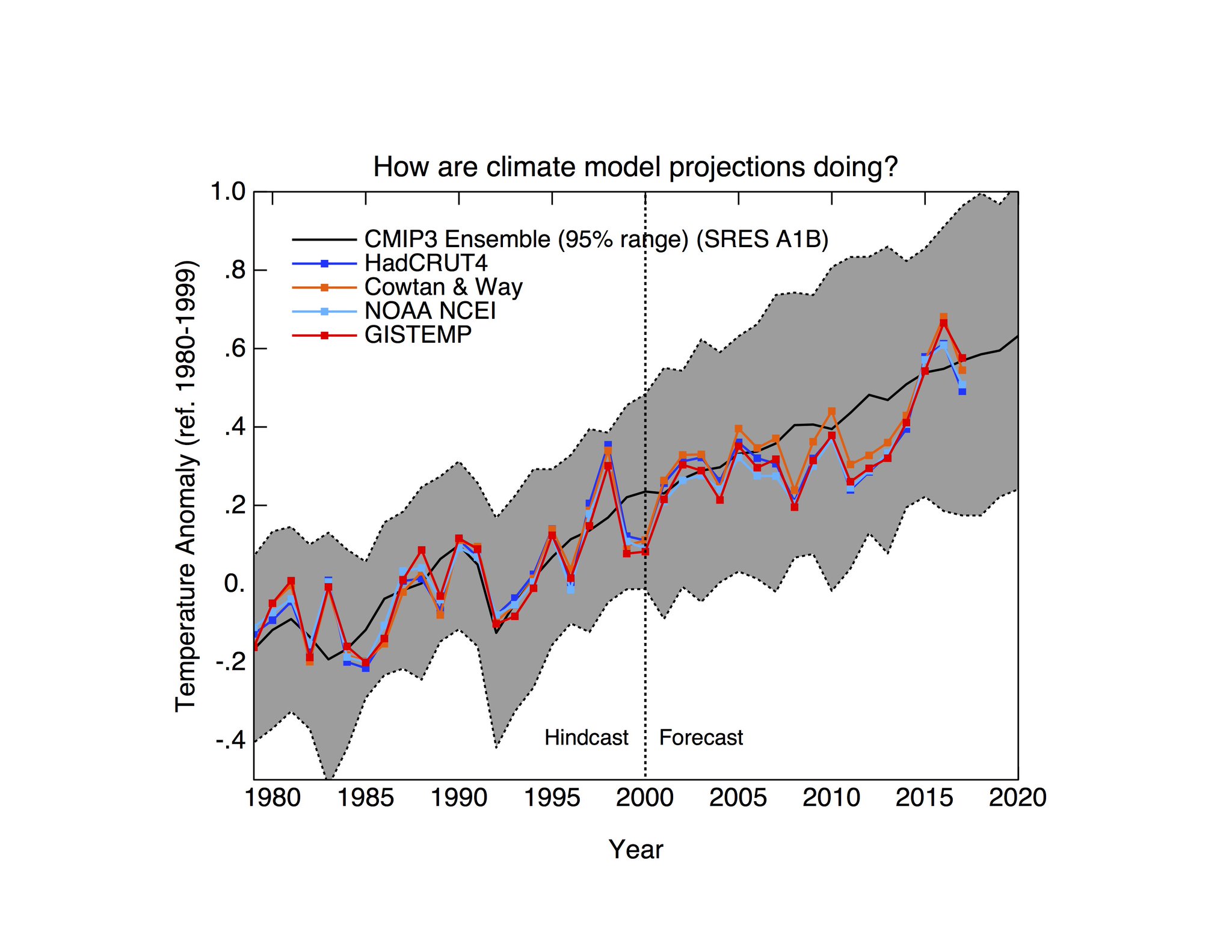
Next year is 2020. That was the year when the world was supposed to see a leveling out of CO2 and CO2 equivalent emissions to assist in reaching the goals of 2030. METHANE pollution has to end. There is no doubt that methane is adding to the difficulty in ending the climate crisis.


Download the Climate 2030 Blueprint (click here)

The savings in the Blueprint are compliments of the Union of Concerned Scientists.

January 3, 2019
By Mark Specht

...California’s program (click here) has three different types of resource adequacy requirements, each designed to keep the grid operating under different types of conditions:

System Capacity: These requirements help keep the lights on during the annual “peak load,” when California uses the most electricity. Peak load usually happens on a hot summer day when everyone turns on their air conditioning. The exact requirements are determined by forecasting the next year’s peak load and adding 15% just to be safe.

Local Capacity: These requirements help keep the lights on in certain local areas during grid emergencies. For example, a grid emergency might entail a combination of a transmission line to a local area going down and a power plant in the local area going out. Different requirements are determined for each local area by studying worst-case-scenario grid emergencies in each area.

Flexible Capacity: These requirements help keep the lights on in the evening when solar generation is winding down and people are starting to use more electricity after coming home from work. Because solar generation tapers off in the evenings when electricity demand is still high, these requirements ensure we have enough flexible resources that can start producing electricity quickly. These requirements are different for each month of the year, and they are based on the largest forecasted three-hour “ramp,” or increase in electricity demand....

There is no turning back the hands of time. The damage is done and it is up to people to protect their planet by understanding and acting to reduce all greenhouse gases.

December 12, 2018
By John Bowden

A researcher and former deputy chair (click here) of a U.N.-backed panel on climate change warned top industrialized nations against disagreeing with a report detailing the dangers of climate change, contending that "so-called superpower" cannot argue with science.

Jean-Pascal Ypersele, a climatologist and professor at Université catholique de Louvain in Belgium, told The Associated Press that countries should do everything possible to work towards the reports goal of reigning in carbon emissions by 2030, at which point scientists say damage to the climate will be irreversible unless urgent action has been taken.

“Nobody, even the so-called superpowers, can negotiate with the laws of physics,” Ypersele told the AP.

Ypersele also said that the 2030 target for controlling carbon emissions and dramatically reducing the use of fossil fuels was non-negotiable....

Switzerland's GDP per capita is $76,682.64 as of 2016.

The Gross Domestic Product (GDP) (click here) in Switzerland was worth 678.89 billion US dollars in 2017. The GDP value of Switzerland represents 1.09 percent of the world economy. GDP in Switzerland averaged 248.71 USD Billion from 1960 until 2017, reaching an all time high of 709.18 USD Billion in 2014 and a record low of 9.52 USD Billion in 1960.


Switzerland governs itself by two legislative documents, "The Kyoto Protocol" and the CO2 Act.

CO2 Act (Act 641.71, fully revised version) (click here)

Legislative (law) / Mitigation Framework /  2013

The CO2 Act is at the core of Swiss climate legislation and has been updated several times, including for meeting Swiss commitments under the UNFCCC.

The most recent version of the CO2 Act is a full revision of the 2000 CO2 Act, which has been partially revised several times, and a response to the need for post-2012 climate legislation until 2020.

The revision of 1 January 2013 sets out a number of targets, measures and strategies to address climate change via emission reductions in Switzerland, including market-based carbon trading mechanisms. Key aspects are:

– Emission reductions by 20% by 2020 below 1990 with domestic measures (possibly 30% depending on other nation’s commitments); any increase beyond the -20% reduction can be met up to 75% with measures carried out abroad....

The hottest year on record.

29 November 2018
By Peter Hannam

This year (click here) is on course to be the fourth hottest year on record, trailing only the three previous years, as rising levels of greenhouse gases warm the planet, the World Meteorological Organisation said.

Up to October 31, mean temperatures in 2018 were an estimated 0.98 warmer than the average for 1850-1900, according the UN agency's provisional State of the Global Climate report.

“We are not on track to meet climate change targets and rein in temperature increases,” said Petteri Taalas, WMO Secretary-General. “Greenhouse gas concentrations are once again at record levels and if the current trend continues we may see temperature increases 3 to 5 degrees by the end of the century."

The WMO report comes days ahead of a global climate summit in Katowice, Poland, where nations will discuss progress on implementing the goals of the Paris climate accord signed three years ago keep temperatures to 1.5-2 degrees above pre-industrial levels. Australia's delegation will be led by Environment Minister Melissa Price....

Foreigner? Not migrants. Interesting that no one is afraid of being a society of diversity.

The current population of Switzerland is 8,577,166 as of Sunday, January 6, 2019, based on the latest United Nations estimates.

Switzerland population is equivalent to 0.11% of the total world population.

Switzerland ranks number 99 in the list of countries (and dependencies) by population.

The population density in Switzerland is 218 per Km2 (564 people per mi2).

The total land area is 39,516 Km2 (15,257 sq. miles)

73.9 % of the population is urban (6,362,047 people in 2019)

The median age in Switzerland is 42.4 years.

I always find it interesting to realize how very different other First World countries are in regard to migrants/foreigners in comparison to the USA.

31 August 2017

The number of foreigners in Switzerland (click here) increased at a faster rate than the number of Swiss in 2016, according to new figures released on Wednesday.

As of January 1st 2017 the population of Switzerland was over 8.4 million, up 1.1 percent from the previous year, the Swiss statistics office said in its annual report.

However while the number of Swiss citizens grew by 0.6 percent in 2016, the number of foreign residents was up by 2.6 percent, it said.

There are now more than 2.1 million foreigners living in Switzerland, up from just under 2.05 million a year earlier, comprising 24.9 percent of the total population....

20 December 2018

The Swiss democratic system (click here) is seriously failing the one in four residents in the country who are foreigners, a major new study published on Wednesday suggests.

The study commissioned by the Federal Commission on Migration (FCM) advisory group looks at the impact of dual nationality on Swiss society.

Around one in four Swiss residents now holds two passports, a number that has soared since Switzerland legalised dual nationality in 1992 – thus establishing itself as something of a pioneer.

The FCM study is generally positive about developments over the last quarter century. Its authors note that foreigners who take up Swiss citizenship “identify more closely with the country where they live” and are "better integrated both socially and culturally”.

It also concludes that dual nationals “are no less loyal to Switzerland” despite having connections with multiple countries....

Soul of Farming | A Good Dog | Organic Valley (no pesticides - click here)

This is the USA. I found it very refreshing to see how committed the Amish are to their organic mission.

Switzerland has an aggressive climate policy which leaves no stone unturned.

Swiss climate policy (click here)

Switzerland pursues an active policy to reduce greenhouse gases, thus contributing to the internationally recognised target of limiting global warming to significantly under 2 °C. The applicable CO2 Act focuses on reducing Switzerland’s domestic emissions.

The CO2 Act, the heart of Swiss climate policy, pursues an emission reduction target for 2020, and is concerned with different instruments for buildings, transport and industry:

Switzerland intends to reduce domestic greenhouse gasses by at least 20% from their 1990 levels, by 2020.

The Act primarily concerns fossil heating and motor fuels, but also includes other important greenhouse gases in addition to CO2.

It also assigns to the federal government the role in adaptation to climate change.

CO2 Levy
Emissions Trading
Buildings
CO2 emissions regulation for vehicles
Compensation for CO2 emissions (mitigation)
Technology Fund
Sector agreements
Adaptation measures

Climate change does not stop at national frontiers. Since Switzerland, with her mountain ecosystem, is strongly affected by warming, a coordinated approach at global level is essential for this alpine country.

Powerful mudslide crashes through village in Switzerland, damaging cars ...(click here for news article - thank you)

8 August 2018

A massive mudslide has crashed down a mountain and into a village in the Swiss municipality of Chamoson, damaging cars and properties in its path.

Swiss media reported the mudslide flowed into the alpine village of Grugnay on Tuesday local time, but no injuries were reported.

The sudden, fast-moving mudslide began in a mountain stream after strong storms hit the area, Swiss broadcaster RTS reported.

The storms caused a riverbed to expand and burst its banks.

Videos published online captured jets of mud gushing into the air, onto roads and destroying street signs nearby, with shocked bystanders running to safety.

Houses and cars were also hit by the debris from the volcanic-like flow.

A video captured and shared by a social media user also showed the mud spewing onto a bridge as the mud rushed beneath it.

People standing on the bridge could be heard shouting and telling each other to be careful.


It's Sunday Night

Meet Sophia Larsen.(click here)

Örebro University (click here) is investing in strengthening collaboration with the surrounding society. Therefore, a new department for communication and collaboration will be established, which will be led by Sofia Larsen.

Sofia Larsen is currently the head of the independent school company AcadeMedia's primary and secondary school activities. Prior to that, she was a business developer and information manager at Örebro University until 2014, and before that she was a Member of Parliament for the Center Party between 1998 and 2010, including with the assignment as chairman of the Education Committee. Sofia Larsen is also chairman of the Jusek Academy Association.

"With her broad experience of education issues and with her commitment to the university's importance to society, Sofia Larsen will be an important addition to the continued development of Örebro University," says University Director Louise Pålsson.

- Örebro University is a strong and forward-looking university. For me, it is very exciting and inspiring to be involved in the continued development and work on strengthening the collaboration assignment, ”says Sofia Larsen.

It was interesting finding a woman to represent Switzerland. I wanted to bring a younger and more current face to this page, but, she had a fairly significant lean into anti-semitism. Hopefully, this choice is more contemporary.

Switzerland National Anthem - "Schweizerpsalm" (click here for the official webpage of Switzerland - thank you)

Schweizerpsalm

Swiss Psalm

Trittst im Morgenrot daher,
Seh' ich dich im Strahlenmeer,
Dich, du Hocherhabener, Herrlicher!
Wenn der Alpenfirn sich rötet,
Betet, freie Schweizer, betet!
Eure fromme Seele ahnt
Gott im hehren Vaterland,
Gott, den Herrn, im hehren Vaterland.

First step in dawn, therefore
I see you in the sea of ​​rays,
You, thou great, glorious one!
When the Alpenfirn reddens,
Pray, free Swiss, pray!
Your devout soul suspects
God in the glory of the Fatherland,
God, the Lord, in the glory of the Fatherland

Kommst im Abendglüh'n daher,
Find' ich dich im Sternenheer,
Dich, du Menschenfreundlicher, Liebender!
In des Himmels lichten Räumen
Kann ich froh und selig träumen!
Denn die fromme Seele ahnt
Gott im hehren Vaterland,
Gott, den Herrn, im hehren Vaterland!

Come in the evening glow, therefore
I find you in the star army,
You, you philanthropic, lover!
In the sky clearing rooms
Can I dream happy and happy!
For the pious soul suspects
God in the glory of the Fatherland,
God, the Lord, in the glory of the Fatherland!

Ziehst im Nebelflor daher,
Such' ich dich im Wolkenmeer,
Dich, du Unergründlicher, Ewiger!
Aus dem grauen Luftgebilde
Bricht die Sonne klar und milde,
Und die fromme Seele ahnt
Gott im hehren Vaterland,
Gott, den Herrn, im hehren Vaterland!

Pull in the nebula, therefore,
I search you in the sea of ​​clouds,
You, you unfathomable, Eternal!
From the gray air structure
Breaks the sun clear and mild,
And the devout soul suspects
God in the glory of the Fatherland,
God, the Lord, in the glory of the Fatherland!

Fährst im wilden Sturm daher,
Bist du selbst uns Hort und Wehr,
Du, allmächtig Waltender, Rettender!
In Gewitternacht und Grauen
Lasst uns kindlich ihm vertrauen!
Ja die fromme Seele ahnt
Gott im hehren Vaterland!
Gott, den Herrn, im hehren Vaterland!

Ferry in the wild storm,
Are you yourself our hoard and weir,
You, almighty Waltender, rescuer!
In thunderstorm and horror
Let us childlike trust him!
Yes, the devout soul suspects
God in the glory of the Fatherland!
God, the Lord, in the glory of the Fatherland!
I am late tonight. 

Thank you for your patience.

Saturday, January 05, 2019

Deaths in the National Parks.

The National Parks are open while the camp grounds are closed during the government shutdown. There are deaths that occur in the parks for a variety of reasons. There are deaths occurring while the psrk’s employees are furloughed. The investigations into these deaths need to include whether or not the death would normally be avoided if employees were at work and/or the park was closed to the public. It is obvious if the park was closed the deaths would not occur, however, is there a margin of safety lost while employees are missing? Is it more prudent to close the parks when government shutdowns occur?

Congress will have to answer that question due to the lack of truthful integrity of the Trump Administration.

Thank you.